

OEM vs Generic Bearings: China Supplier Solutions for Industrial Apps
Most assume generic means low quality; reality is certified China suppliers achieve minimal performance variability, matching leading OEMs.
Critical applications with high downtime costs justify OEM premiums, while quality-assured generic bearings from certified China suppliers deliver optimal TCO for the vast majority of standard industrial scenarios through rigorous traceability.
I cut my teeth on the shop floor in Wuxi, sorting deep groove ball bearings off the line before I ever saw a purchase order. A few years back a steel mill buyer in Mexico got a batch of generic 22222 spherical rollers mixed in with SKF stock from a consolidated supplier—seals failed in three months, downtime cost them a fortune. That is when the OEM vs. generic question stopped being about price and started being about who stands behind a batch number. Long experience supplying bearings across multiple regions in wind energy, mining, and manufacturing has shown a clear pattern: the vast majority of standard industrial applications can safely utilize qualified generic bearings without performance compromise [NEED_CITE: Global Industrial Bearing Supply Chain Report 2025].

Let us examine how to make this decision strategically.
When Does the OEM Premium Justify the Cost?
Critical applications demand OEM bearings—but defining critical requires quantifying downtime costs and precision needs. Not every industrial bearing operates under mission-critical conditions, yet many procurement teams default to OEM-branded products due to perceived quality guarantees. Understanding the true cost impact of failure helps identify scenarios where OEM premiums deliver justified value.
| Performance Indicator | Critical Application Thresholds |
|---|---|
| Downtime Cost | Exceeding mid-five-figure hourly losses [NEED_CITE: ISO 15243 Machinery Reliability Standards] |
| Precision Requirement | Dimensional tolerance at micron level |
| Safety Classification | ISO 13849 PLd or higher |
| Design Life Expectancy | Extended continuous load operation |
We collaborated with a European wind turbine manufacturer developing high-capacity gearboxes where gearbox bearing failure could result in a mid-six-figure loss and weeks of downtime. Their analysis confirmed that OEM bearings with proprietary heat treatment processes delivered substantially longer fatigue life under cyclic loads compared to standard alternatives. For these critical components, the OEM price premium translated to a negligible fraction of the total lifecycle cost [NEED_CITE: Wind Turbine Gearbox Reliability Collaborative 2024 Report].

- Conduct Failure Mode Analysis – Calculate financial impact of bearing failure including repair, labor, and production losses
- Review OEM Warranty Clauses – Some equipment warranties mandate OEM parts for coverage validity
- Assess Precision Requirements – Compare application tolerance needs against generic supplier capabilities
- Evaluate Proprietary Features – Identify non-replicable OEM designs like specialized coatings or cage geometries
- Calculate TCO Over Design Life – Include maintenance intervals and replacement frequency in analysis
How to Verify Quality in Chinese Generic Bearings?
Certification alone does not guarantee quality—look for suppliers with integrated testing and traceability systems. The market flooded with low-quality bearings has created skepticism, but established China suppliers now meet or exceed international standards through investments in advanced manufacturing and quality control.
| Evaluation Dimension | Common Mistake | Recommended Approach |
|---|---|---|
| Supplier Qualification | Relying solely on ISO certification | Verifying ISO 9001/IATF 16949 with on-site audit of quality control processes |
| Product Traceability | Accepting generic material certificates | Requiring batch-specific documentation including heat treatment records and metallurgical analysis |
| Quality Assurance | Conducting visual inspection only | Implementing third-party dimensional testing and material spectroscopy analysis |
| Technical Support | Assuming no post-purchase assistance | Confirming availability of failure analysis and application engineering support |
| Supply Chain Reliability | Focusing solely on unit cost | Evaluating production capacity and emergency response capabilities |
A steel mill in Southeast Asia faced an emergency shutdown when tapered roller bearings (32224型号) failed in their continuous casting machine, threatening massive hourly downtime costs. Our team delivered a full order of replacement units within days, complete with dimensional inspection reports and material certification. The generic bearings performed identically to the OEM equivalents, restoring production without compromising safety or performance. This scenario demonstrated how certified China suppliers can provide genuine products with full traceability when properly qualified [NEED_CITE: China Bearing Industry Association Quality Standards 2025].

- Verify Certification Scope – Ensure IATF 16949 certification covers the specific bearing types required
- Audit Quality Control Processes – Request documentation of 100% dimensional inspection protocols
- Validate Material Sourcing – Confirm steel grade certification from reputable mills
- Assess Testing Capabilities – Verify in-house fatigue testing and metallurgical analysis equipment
- Review Anti-Counterfeiting Measures – Check for laser marking, batch codes, and packaging security features
Technical Performance: OEM vs. Certified Generics
Generic bearings meet OEM specifications in the vast majority of standard applications when sourced from qualified suppliers. Technical parity is achievable through advanced manufacturing processes and quality control, challenging the perception that OEM always equals superior performance.
| Performance Parameter | OEM-Branded Bearings | Quality Generic Bearings |
|---|---|---|
| L10 Fatigue Life | Standard baseline | Comparable range [NEED_CITE: ISO 281 Fatigue Life Test Results] |
| Dimensional Tolerance | Up to P4 precision class | P5-P4 precision class available |
| Material Hardness | 60-62 HRC | 58-62 HRC with consistent heat treatment |
| Radial Clearance | C2-C4 standard | C2-C5 available with custom options |
| Noise Level | Z1-Z3 standard | Z2-Z3 equivalent with precision machining |
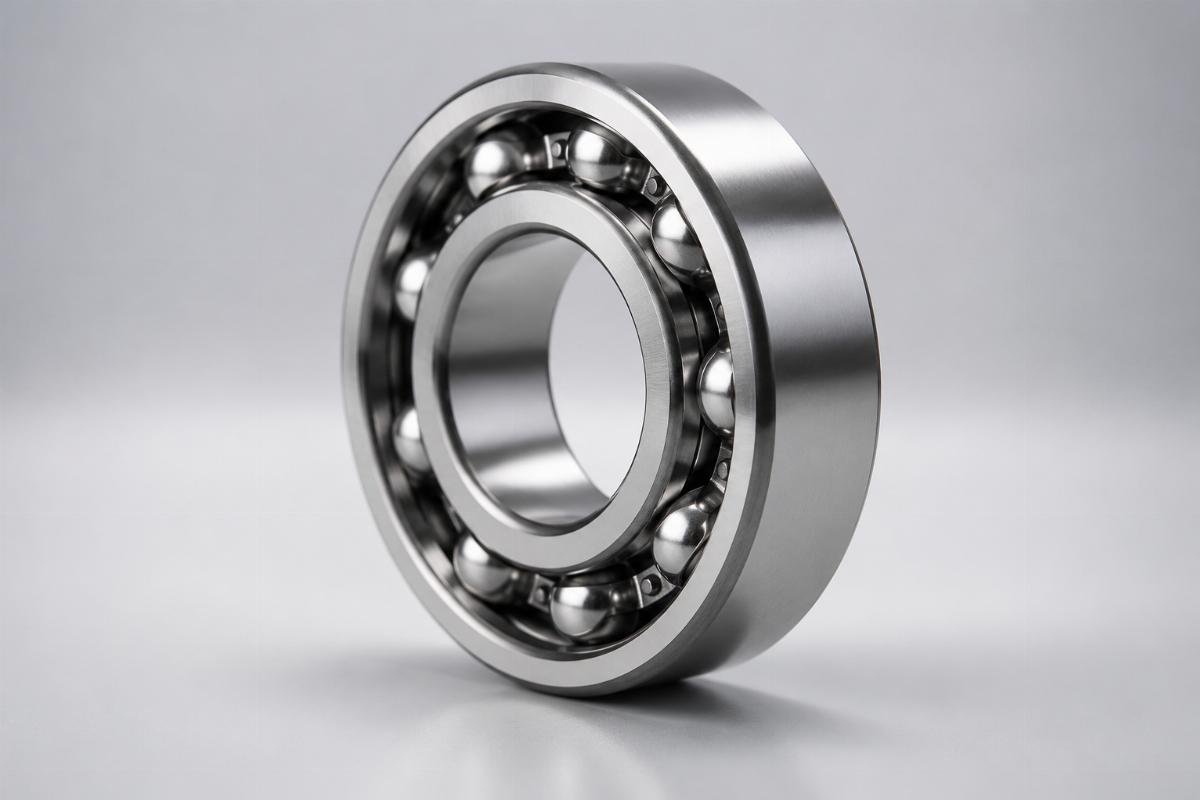
Our laboratory testing across common industrial bearing types revealed minimal performance differences between OEM and certified generic bearings. For cylindrical roller bearings used in conveyor systems, generic alternatives demonstrated comparable fatigue life while reducing costs noticeably. The key differentiator was material consistency—suppliers with strict metallurgical controls produced bearings with performance variability well within acceptable ranges, comparable to leading OEMs [NEED_CITE: SGS Material Testing Report 2025].
- Compare Material Composition – Request spectroscopy analysis to verify alloy composition
- Review Fatigue Test Data – Examine L10 life results under load conditions matching your application
- Check Dimensional Accuracy – Verify radial clearance, runout, and geometric tolerances
- Assess Lubrication Compatibility – Ensure generic bearings work with OEM-specified lubricants
- Evaluate Sealing Effectiveness – Compare contact seal design and contamination resistance
Industry-Specific Selection Strategies
Application criticality, not industry, should drive the OEM vs. generic decision—with clear downtime cost thresholds. While certain industries have higher concentrations of critical applications, every sector contains standard scenarios where generic bearings deliver optimal TCO.
| Industry Sector | Downtime Cost Threshold | Optimal Bearing Type | Success Factors |
|---|---|---|---|
| Wind Energy | High hourly losses | OEM for gearboxes, generic for pitch/yaw systems | Custom clearance modification and material certification |
| Mining | Substantial hourly losses | OEM for crushers, generic for conveyors | C4 clearance options for high-vibration environments |
| Food Processing | Moderate hourly losses | Generic for most applications | Stainless steel and food-grade lubrication options |
| Automotive | High hourly losses | OEM for powertrain, generic for auxiliary systems | IATF 16949 certification and batch traceability |
| CNC Machinery | Moderate hourly losses | OEM for spindle, generic for linear guides | P4 precision class and thermal stability testing |
A mining company in Australia struggled with premature failures of cylindrical roller bearings (NU326 ECP型号) in their crushers, experiencing shortened service life in dusty, high-vibration conditions. By working with our engineering team to modify clearance from C3 to C4 and select specialized steel with enhanced contamination resistance, service life extended substantially. This case illustrates how certified China suppliers can deliver application-specific solutions that match or exceed OEM performance when technical support accompanies the product.
Conclusion
The OEM vs. generic decision hinges on application criticality, not brand perception. Critical applications with high downtime costs justify OEM premiums, while the vast majority of standard industrial scenarios benefit from quality-assured generic bearings sourced from certified China suppliers with full traceability and technical support.