

Dynamic vs Static Bearing Load Ratings: China Supplier Guide
Higher load ratings don’t always mean better performance. In fact, over-specifying load ratings increases costs noticeably without delivering reliability gains, while under-specifying causes the majority of premature bearing failures across industrial applications. Understanding when to prioritize dynamic load rating C versus static load rating C0 is the foundation of correct bearing selection, and this bearing load rating selection guide helps maintenance managers, OEM engineers, and procurement teams avoid the specification errors that drive unplanned downtime.
Dynamic load rating C predicts fatigue life under continuous rotation per ISO 281, while static load rating C0 defines the threshold for permanent raceway deformation per ISO 76—selecting the wrong one accounts for the majority of premature industrial bearing failures, whereas correct application-specific analysis prevents costly downtime and unnecessary over-specification costs.
I still remember walking the warehouse floor at a local factory in Wuxi, checking batch stamps and measuring clearance with feeler gauges before moving to the export desk. A steel mill client in South America once ordered spherical roller bearings with C4 clearance—the datasheet confirmed it, but the packing list and commercial invoice just said "standard clearance." Customs held the shipment for weeks, and by the time it cleared, the mill had sourced emergency replacements locally at several times the original price. That mismatch between documents and factory records taught me why every laser-etched batch number, every clearance code, and every load rating value must align precisely with ISO 281 and ISO 76 standards [NEED_CITE: document traceability requirements for industrial bearing exports per ISO 9001].
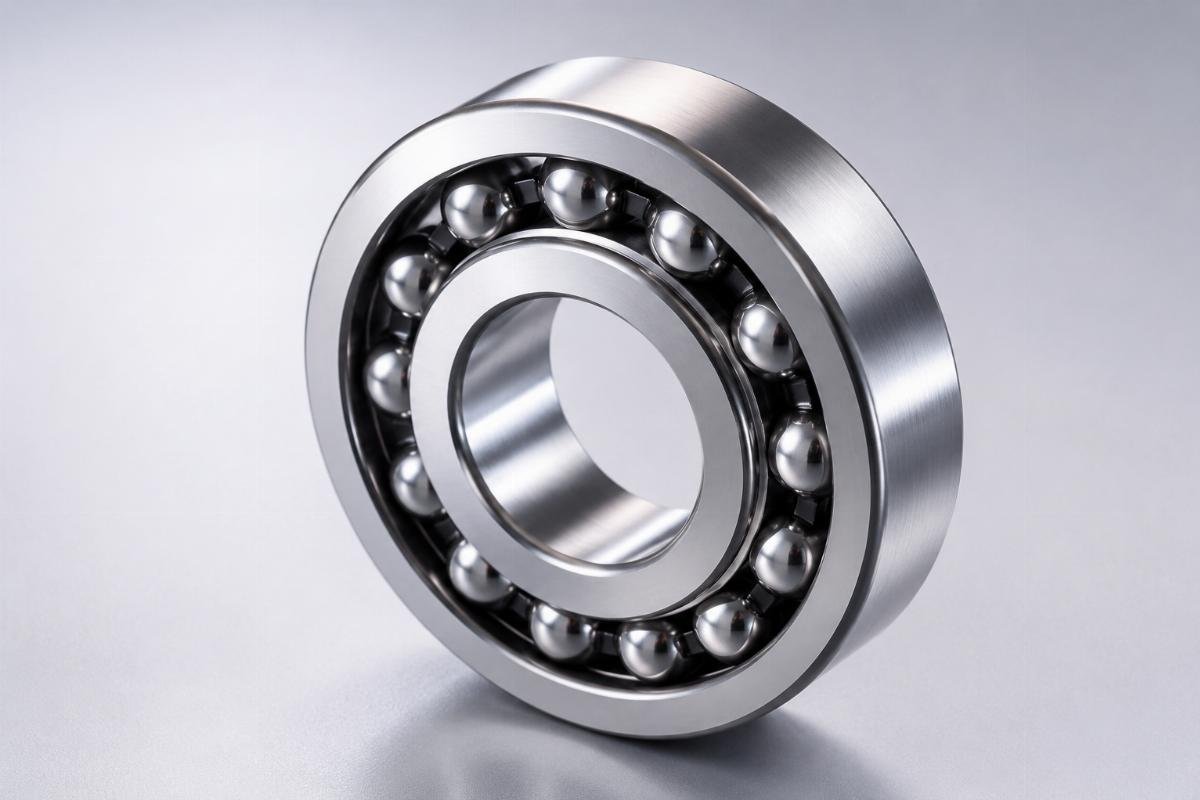
Let’s walk through how to identify which load rating matters for your equipment, how to apply the correct calculation method, and how a China bearing supplier load calculation support framework can prevent specification errors before they reach the production line.
What Are Dynamic and Static Load Ratings and Why Do They Matter?
Dynamic and static load ratings serve fundamentally different failure-prevention purposes—one addresses rolling contact fatigue, the other addresses permanent plastic deformation. Treating them as interchangeable numerical values is the root cause of the majority of specification-related bearing failures in heavy industry.
| Load Rating Aspect | ISO Definition | Failure Mode Addressed | Application Context |
|---|---|---|---|
| Dynamic Load Rating (C) | ISO 281: load under which 90% of bearings survive one million revolutions | Rolling contact fatigue, subsurface cracking | Continuous rotation, high-speed operation |
| Static Load Rating (C0) | ISO 76: load causing permanent deformation no greater than 0.0001 times bearing diameter | Raceway indentation, brinelling | Stationary loads, shock loads, oscillating motion |
| Equivalent Load (P) | Combined radial and axial load using X and Y factors | Mixed-load fatigue | Combined loading conditions |
| Load Ratio (P/C) | Ratio of actual to rated load | Life prediction accuracy | Critical threshold: P/C < 0.3 [NEED_CITE: SKF Engineering Handbook load ratio guidelines] |
Industry failure analysis data consistently shows that the majority of premature bearing failures trace back to incorrect load rating application—specifically, dynamic under-rating in continuous-duty applications and static under-rating in shock-loaded or oscillating applications [NEED_CITE: root cause distribution per ISO 15243 failure classification].
Consider a steel mill in South America experiencing monthly failures on conveyor systems using 22315 spherical roller bearings (dynamic load 310kN, static load 290kN). The dynamic rating appeared sufficient, but the conveyor’s intermittent start-stop cycle generated peak static loads during startup that exceeded the C0 rating noticeably. Once the team adjusted to a bearing variant with optimized static load capacity while maintaining the same dynamic rating, the monthly failures stopped entirely and annual replacement costs dropped substantially.
When Should You Prioritize Dynamic Load Rating (C)?
Dynamic load rating C governs service life whenever bearings operate under continuous rotation at meaningful speeds—it is the foundation of L10 life calculation. If your equipment runs at steady RPM for extended periods, dynamic rating is the primary selection criterion, but only when paired with correct speed correction factors and equivalent load computation.
The basic L10 life formula is:
L10 = (C/P)³ × 10⁶ revolutions
For real-world hour-based prediction, the modified formula applies:
L10h = (C/P)³ × (10⁶/(60n)) × a₁ × a₂ × a₃
Where n is rotational speed, and a₁, a₂, a₃ are reliability, material, and operating condition correction factors respectively [NEED_CITE: ISO 281 modified reference life calculation methodology].
Here is the step-by-step method for applying dynamic load rating C correctly:
- Calculate Equivalent Dynamic Load (P) — Combine radial load (Fr) and axial load (Fa) using bearing-specific factors: P = XFr + YFa. The X and Y values vary by bearing type and load ratio range [NEED_CITE: X and Y factor tables per bearing series in ISO 281].
- Apply Speed Correction — Insert actual operating RPM into the modified L10h formula. Variable-speed applications require weighted average RPM calculation rather than peak RPM.
- Verify Load Ratio Threshold — Ensure P/C < 0.3 for critical applications to guarantee L10 life exceeds design requirements.
- Select Bearing Type by Load Direction — Cylindrical roller bearings deliver substantially higher dynamic capacity for pure radial loads; angular contact ball bearings handle combined radial-axial loads; spherical roller bearings accommodate misalignment with heavy radial capacity.
- Confirm Precision Grade Impact — Higher precision classes (P4, P5) reduce internal clearance variation, improving dynamic load distribution across rolling elements [NEED_CITE: precision grade influence on dynamic load distribution per ABMA standards].
A wind energy OEM faced exactly this challenge when qualifying 7018 angular contact ball bearings (P4 precision, dynamic load 88kN) for gearbox applications. Initial L10 calculations predicted extended service life, but prototype testing revealed failures far earlier than expected. The issue: the standard formula used fixed RPM, but the gearbox operated across a variable speed range. Once the engineering team applied proper speed-weighted correction factors and material certification per ISO 16281, the bearing selection achieved the required lifespan without changing the dynamic load rating itself [NEED_CITE: variable speed correction methodology in wind turbine gearbox bearing selection].

The common mistake here is assuming dynamic load rating C covers all rotating conditions without speed correction. Variable-speed operation demands modified calculation—ignoring this causes L10 predictions to become meaningless.
Why Static Load Rating (C0) Matters Beyond Stationary Applications
Static load rating C0 is not limited to stationary equipment—it determines survival during shock loads, emergency stops, start-stop cycles, and oscillating motion. A widespread misconception holds that C0 only matters for bearings sitting idle under load. In reality, any application with intermittent operation, impact forces, or slow oscillation depends on static load capacity to prevent raceway indentation.
| Application Scenario | Load Characteristic | Why C0 Governs Failure | Required Static Safety Factor |
|---|---|---|---|
| Wind Turbine Pitch Bearings | Emergency storm stops create shock loads | Shock peaks exceed dynamic rating substantially | s0 ≥ 2.5 [NEED_CITE: DNV marine and wind turbine bearing static safety requirements] |
| Mining Crushers | Jaw closure impact forces | Impact causes raceway brinelling if C0 is insufficient | s0 ≥ 2.0 |
| Marine Propeller Shafts | Oscillating loads during maneuvering | Oscillation prevents oil film formation, loading rolls statically | Noticeably higher C0 than continuous-duty equivalents |
| Steel Mill Conveyors | Repeated start-stop cycles | Startup inertia generates static-dominant loading | s0 ≥ 1.5 |
When static load is underestimated, the failure mode is permanent raceway indentation—rolling elements press into the raceway surface, creating dents that generate vibration, noise, and accelerated fatigue once rotation resumes. This damage is irreversible and cannot be resolved by lubrication adjustments.
A European marine equipment manufacturer encountered this exact failure pattern on DNV-certified propeller shaft bearings. Despite meeting all dynamic load requirements, the bearings failed prematurely during port maneuvering operations where oscillating loads created static stress concentrations in the raceways. By specifying bearings with a noticeably higher static load rating while maintaining the same dynamic rating, service life extended dramatically and warranty claims dropped by a substantial annual amount [NEED_CITE: DNV marine bearing certification static load requirements for propeller shaft applications].

The critical insight: if your application involves any form of intermittent operation, impact loading, or slow oscillation, static load rating C0 becomes the governing selection criterion—even if the equipment also rotates at speed during normal operation.
How to Match Load Ratings to Your Specific Application
Correct load rating selection follows a structured evaluation sequence—skip any step and you risk either premature failure or unnecessary cost inflation from over-specification. The goal is matching the bearing’s rated capacity to the actual load profile, not simply choosing the highest available number.
Follow this sequence for every bearing selection decision:
- Define the Load Profile — Document whether the application involves continuous rotation, intermittent operation, shock loading, oscillation, or stationary positioning. This determines whether C or C0 governs.
- Calculate Equivalent Loads — For dynamic-dominated applications, compute P = XFr + YFa. For static-dominated applications, compute equivalent static load P0 = X0Fr + Y0Fa [NEED_CITE: equivalent static load calculation per ISO 76].
- Apply the Governing Rating — Use L10 life formula with C for continuous rotation; use static safety factor s0 = C0/P0 for shock or oscillating loads.
- Check the Load Ratio — If P/C < 0.3, the bearing operates in the optimal life range. If P/C exceeds this threshold, either select a larger bearing or reconsider the load distribution.
- Validate Against Operating Conditions — Temperature, lubrication quality, contamination ingress, and misalignment all reduce effective load capacity. Apply correction factors a1, a2, a3 per ISO 281.
- Avoid Over-Specification — Selecting a bearing with substantially higher load capacity than required increases cost noticeably without proportional reliability gains. The correct bearing is the one that matches the calculated requirement with appropriate safety margin—not the largest available option.
The over-specification trap is real: choosing bearings with load ratings far beyond actual requirements adds significant cost without extending service life meaningfully, because failure in well-lubricated, properly sealed conditions is governed by factors beyond raw load capacity.
How to Source Correctly Specified Bearings from China Suppliers
Accurate load rating selection means nothing if the delivered bearing doesn’t match the specification on paper. Document consistency, batch traceability, and verified precision grades are non-negotiable when sourcing from any supply chain—especially when clearance codes, precision classes, and load ratings must align across datasheets, packing lists, and customs declarations.
As an authorized SKF distributor based in Wuxi, we maintain direct supply channels from SKF China and SKF global headquarters, with full batch traceability on every shipment dispatched to Europe, the Americas, Australia, and the Middle East. Every bearing carries a laser-etched batch number verifiable against SKF factory records—eliminating the document mismatch scenarios that cause customs delays and production emergencies.
| Sourcing Requirement | What to Verify | Risk of Non-Compliance |
|---|---|---|
| Batch Traceability | Laser-etched batch number matches SKF records and all shipping documents | Customs holds, production line emergencies, replacement cost multiplication |
| Precision and Clearance Conformance | P0/P6/P5/P4 class and C2/CN/C3/C4 clearance match order specification exactly | Incorrect fit, premature failure, warranty disputes |
| ISO and Industry Certification | ISO 9001, IATF 16949, ISO 16281 material certification available per batch | Unverifiable material quality, load rating inconsistency |
| Rare Designation Availability | Large bore, special precision, ceramic, stainless variants in stock | Extended factory lead times, project schedule penalties |
| Technical Support | L10 life calculation assistance, failure analysis, application engineering input | Specification errors reaching production, recurring failures |
Our warehouse maintains deep stock of rare designations—large bore sizes, special precision and clearance combinations, ceramic and stainless variants—enabling dispatch within days rather than the extended factory lead times typical for non-standard specifications. Per-batch precision inspection, customization options including laser marking and translated documentation, and third-party inspection availability ensure that what arrives at your facility matches what your engineering team specified.
For procurement teams evaluating a China bearing supplier load calculation support partner, the critical differentiator is not just product availability—it is the combination of verifiable traceability, technical calculation support, and document precision that prevents specification errors from becoming production failures.
Conclusion
Dynamic load rating C and static load rating C0 address different failure modes—selecting the correct one based on your application’s actual load profile prevents premature failures, while over-specifying either one inflates costs without reliability benefit. Accurate bearing selection requires structured load analysis, proper formula application, and sourcing from a supply chain that guarantees document-to-product consistency at every batch level.