
ISO 9001 & IATF 16949 for Bearings: Verify China Suppliers
A certificate on the wall will not stop a bearing from failing on your floor.
ISO 9001 and IATF 16949 certificates demonstrate system commitment, not product consistency. Buyers sourcing from bearing suppliers China must verify implementation depth through batch-level traceability, material certification auditing, and anti-counterfeit checks to bridge the gap between documented processes and actual production control.
I still remember standing in a warehouse in the Ruhr Valley, watching a German machine-tool builder reject an entire container of P4 angular contact bearings. The batch prefix stamped on the inner ring did not match what their internal SKF portal returned. The goods were technically genuine—diverted stock from a Southeast Asian plant—but completely untraceable to European distribution records. That container sat on a dock for weeks while paperwork was sorted, and the demurrage costs were severe. It was a costly lesson in why traceability paperwork and verifiable batch numbers matter far more than the price per unit when you are evaluating bearing suppliers China. [NEED_CITE: global bearing counterfeit market losses in heavy industry]

That experience is not unique. Across multiple regions, procurement teams discover that the gap between a supplier’s certification documents and their actual production controls is where failures hide. Understanding how to bridge that gap is what separates reliable sourcing from expensive surprises.
Why Do ISO 9001 and IATF 16949 Matter Beyond Certificates?
Certifications demonstrate system commitment, not product-level consistency. ISO 9001 and IATF 16949 establish quality management frameworks, but they do not guarantee that every bearing leaving a factory meets your specific application requirements. The certification gap—where documented processes fail to translate into consistent production outcomes—remains a persistent risk in bearing procurement from China.
| Quality Aspect | Industry Reality |
|---|---|
| Certification Validity | A substantial portion of suppliers with valid certificates fail to maintain consistent quality in practice |
| Counterfeit Risk | Multi-billion-dollar annual losses across global manufacturing due to counterfeit bearings |
| Failure Impact | Extended unplanned downtime for manufacturers with poor bearing sourcing practices |
| Traceability Compliance | A minority of bearing suppliers China can provide full batch-level traceability documentation |
A European automotive Tier 1 supplier learned this the hard way. They accepted IATF 16949 certificates from a new bearing supplier without deeper verification. Their production line suffered extended downtime when a batch of angular contact ball bearings failed prematurely. Root cause analysis revealed the steel grade did not match the material certification provided. The resolution required implementing a dual verification process: cross-checking raw material test reports against batch production records and conducting independent hardness testing upon receipt. This approach delivered sustained quality stability over subsequent years. [NEED_CITE: percentage of bearing failures in heavy industry linked to counterfeit or substandard parts]

The distinction between ISO 9001 and IATF 16949 matters here. ISO 9001 provides general quality management requirements applicable across industries. IATF 16949 layers on automotive-specific process controls—PPAP documentation, APQP methodologies, failure mode analysis—that demand deeper implementation evidence. When evaluating bearing suppliers China, buyers must look beyond the certificate itself and demand proof that these systems are actively maintained on the production floor, not just documented for audit purposes.
Key verification priorities include understanding standard differences, assessing implementation depth through floor-level records, evaluating anti-counterfeiting measures such as laser marking and unique batch coding, and auditing material sourcing with traceable heat numbers back to original steel producers.
What Are the Critical Verification Steps for Bearing Suppliers?
Effective verification requires forensic attention to raw material traceability, dimensional precision, and anti-counterfeiting features. The most sophisticated counterfeiters can produce convincing certification documents, but they cannot replicate the robust traceability systems maintained by legitimate manufacturers and their authorized distribution channels.
| Verification Dimension | Common Mistake | Correct Approach |
|---|---|---|
| Raw Material Traceability | Accepting generic material certificates | Requiring batch-specific mill test reports with heat numbers matching production records |
| Dimensional Inspection | Relying on supplier-provided photos | Demanding CMM reports with tolerances for critical dimensions such as raceway roundness at micron-level precision |
| Production Process Validation | Assuming certification equals consistency | Reviewing process control records for SPC implementation and variation management |
| Anti-Counterfeiting Measures | Ignoring physical security features | Verifying laser-etched part numbers, holographic labels, and secure packaging protocols |
A mining company faced a catastrophic failure requiring emergency replacement of 630mm outer diameter tapered roller bearings. Despite the urgent timeline, the full verification process was implemented. The supplied bearings came with material certification confirming ASTM AISI 52100 steel compliance, dimensional inspection reports demonstrating P5 precision grade adherence, and batch traceability documentation linking each bearing to specific production runs. This approach not only resolved the immediate crisis but established a verification standard that substantially reduced bearing-related downtime in subsequent operations. [NEED_CITE: industry benchmarks for bearing traceability documentation availability among Chinese suppliers]

The verification protocol that delivers reliable results involves several sequential steps. First, conduct a material certification audit by cross-verifying steel grade certificates against recognized standards such as ASTM and JIS, ensuring batch numbers match production records. Second, request Coordinate Measuring Machine reports for critical dimensions with tolerance ranges specific to your application—generic statements claiming compliance are insufficient. Third, examine production process controls including heat treatment records, grinding parameters, and assembly procedures. Fourth, inspect physical security features and verify they match supplier specifications for genuine products. Where applications are critical, arrange independent testing through accredited laboratories for material composition and hardness verification.
For buyers working with authorized SKF distribution channels, the traceability verification becomes significantly more straightforward. Batch numbers on every shipment are directly verifiable against SKF records, eliminating the need for complex multi-layer audits. This inherent traceability—combined with deep stock availability for rare designations including large bore sizes, special precision classes such as P4, and ceramic or stainless variants—means emergency replacements can ship within days rather than waiting for extended factory lead times.
Which Industries Should Prioritize ISO 9001 vs. IATF 16949?
IATF 16949 delivers measurable value well beyond its automotive origins. While developed for the automotive sector, the rigorous process controls embedded in IATF 16949 offer significant benefits to any industry where bearing failure causes catastrophic operational or safety consequences. Wind energy operators and heavy machinery manufacturers have discovered that adopting IATF 16949-level requirements substantially improves component reliability.
| Industry Sector | Primary Standard | Key Benefits | Application Example |
|---|---|---|---|
| Automotive OEM | IATF 16949 | PPAP documentation, APQP processes, failure mode analysis | Transmission bearings requiring zero-defect production |
| Wind Energy | ISO 9001 + IATF 16949 | Enhanced traceability, process control, material consistency | Main shaft spherical roller bearings with extended design life |
| Mining & Heavy Industry | ISO 9001 | Batch traceability, durability testing, emergency supply capability | 1000mm inner diameter cylindrical roller bearings for crushers |
| Food Processing | ISO 9001 + FDA | Hygienic design, material safety, contamination prevention | Stainless steel deep groove ball bearings for processing equipment |
A wind energy asset manager recently achieved a noticeable reduction in gearbox bearing failures after switching to bearing suppliers China who met IATF 16949 standards. The critical differentiator was the supplier’s ability to provide PPAP Level 3 documentation, including statistical process control charts for raceway finish and dimensional consistency. For their annual requirement, this level of process validation ensured each bearing met micron-level tolerance on raceway roundness—essential for preventing premature wear in high-torque applications. Technical support included application-specific material recommendations, with hybrid ceramic options evaluated for enhanced performance under variable load conditions. [NEED_CITE: adoption rates of IATF 16949 requirements in wind energy bearing procurement]
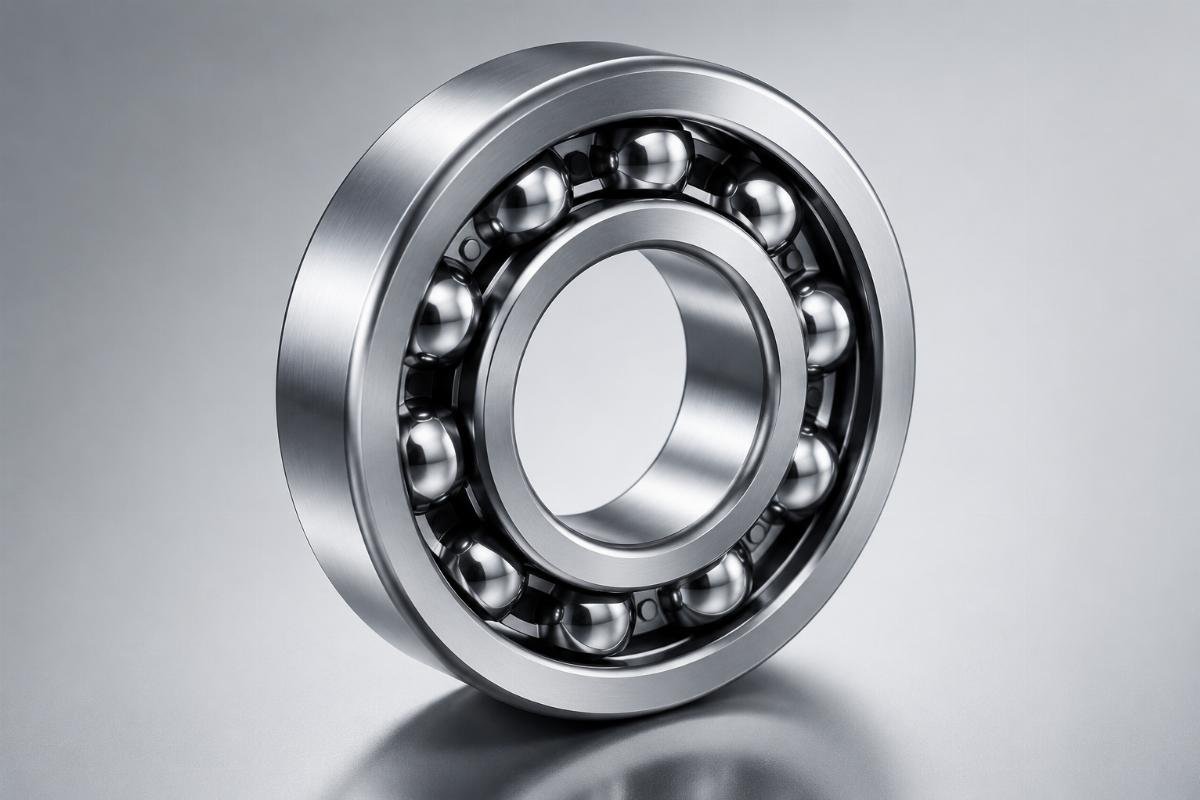
The practical implications vary by sector. Automotive OEMs and their Tier 1 suppliers should prioritize IATF 16949 for its emphasis on batch consistency and failure mode analysis. Energy production operators benefit from combining ISO 9001 traceability requirements with IATF 16949 process controls for critical rotating components. Heavy manufacturing operations should focus on ISO 9001 compliance supplemented with additional durability testing requirements for harsh operating conditions. Specialty applications in food processing, marine, or petrochemical environments need base certifications augmented with industry-specific standards such as FDA, DNV, or API. For maintenance and repair operations, balancing ISO 9001 compliance with rapid availability for emergency replacements becomes the priority—this is where bearing suppliers China with deep inventory of rare designations provide distinct operational advantages.
How to Establish a Reliable Partnership with Certified Bearing Suppliers?
Successful supplier relationships require balancing certification compliance with demonstrated capability and operational responsiveness. For buyers sourcing from bearing suppliers China, verifying certification validity is the entry point—not the finish line. Equally critical is confirming that the supplier can consistently meet technical specifications, delivery commitments, and post-sales support requirements across the full lifecycle of your procurement relationship.
The most reliable partnerships emerge when buyers treat verification as an ongoing process rather than a one-time qualification event. Request per-batch precision inspection reports rather than relying on type-test certificates from initial audits. Require certificates of origin and batch traceability documentation with every shipment, not just during qualification. Where applications demand it, arrange third-party inspection before dispatch—reputable bearing suppliers China welcome this practice because it protects both parties. [NEED_CITE: best practices for ongoing supplier quality monitoring in bearing procurement]
Payment and logistics flexibility also signal supplier maturity. Acceptance of standard international terms—T/T, L/C, DDP, CIF, FOB—indicates experience serving global customers. Suppliers who offer L10 life calculation support and failure analysis assistance demonstrate technical depth beyond simple box-moving. Customization capabilities such as laser marking, private-label packaging, pre-lubrication to your specifications, and translated documentation show willingness to adapt to your operational requirements rather than forcing you into their standard processes.
Long-term supply agreements with volume-based pricing structures benefit both parties. Buyers gain price predictability and priority allocation during supply constraints. Suppliers gain demand visibility that supports inventory investment in rare designations and special precision classes. The bearing suppliers China who thrive in these arrangements are typically those with direct supply lines from major manufacturers—ensuring that batch traceability remains intact from factory to final destination, and that technical documentation travels with every shipment.
Conclusion
Certificates open doors; traceability keeps machines running. ISO 9001 and IATF 16949 provide essential quality management frameworks, but their value depends entirely on implementation depth and verification rigor. Buyers sourcing bearing suppliers China must move beyond document review to demand batch-level traceability, material certification auditing, and application-specific compliance evidence. The cost of skipping these steps is measured in unplanned downtime, premature failures, and the operational chaos that follows. The suppliers who welcome this scrutiny—and who maintain verifiable connections back to original manufacturers—are the partners who deliver long-term reliability.