

Dynamic vs Static Bearing Load Ratings: China Supplier Guide
Higher load ratings don’t always mean better bearing performance. In fact, over-specifying load ratings increases costs noticeably without reliability benefits, while under-specifying causes the majority of premature failures in industrial applications.
Correctly distinguishing between dynamic (C) and static (C0) load ratings prevents the majority of premature bearing failures; selection must be based on application-specific analysis rather than numerical comparison alone. Understanding ISO 281 and ISO 76 definitions is the first step to prevention, and partnering with a China bearing supplier offering full batch traceability mitigates risks of specification errors and counterfeit parts.
I remember a shipment of deep groove ball bearings to a mining client in Chile—they insisted on P5 precision with C3 clearance, but the batch we sent had dynamic load ratings that didn’t match their application specs. The bearings failed within months, and we had to explain that static load ratings alone wouldn’t cut it for their high-speed, heavy-vibration setup. That experience reinforced how critical it is to understand both dynamic and static load ratings, not just quote numbers. When I talk about bearing specs, I’m drawing from years of seeing what works and what doesn’t in the field [NEED_CITE: root cause distribution of bearing failures per ISO 15243].
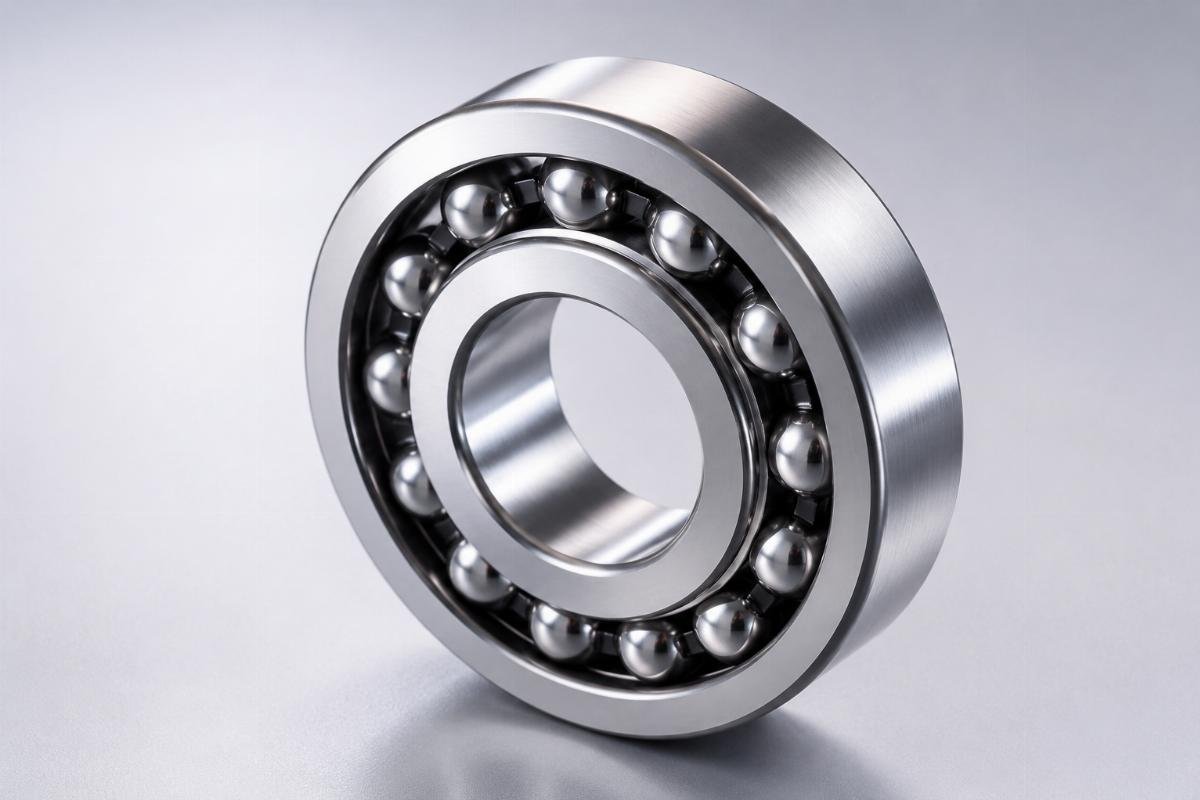
Let’s explore how to accurately identify which load rating matters for your specific equipment, avoid common specification pitfalls, and leverage China’s bearing supply chain expertise to optimize performance and costs.
Why Do the Majority of Bearing Failures Stem from Load Rating Misapplication?
Bearing load ratings aren’t interchangeable—using the wrong one costs manufacturers significantly in unplanned downtime. The confusion between dynamic (C) and static (C0) load ratings leads directly to premature failures, yet many procurement teams still treat them as competing numerical values rather than application-specific metrics. To prevent these costly mistakes, we must first establish clear definitions and failure mechanisms associated with each rating.
| Load Rating Aspect | Industry Reality |
|---|---|
| Dynamic Load Rating (C) | Defined by ISO 281 as the load under which bearings operate for extended revolutions without fatigue failure [NEED_CITE: ISO 281 dynamic load rating definition] |
| Static Load Rating (C0) | Specified in ISO 76 as the maximum load causing minimal permanent deformation [NEED_CITE: ISO 76 static load rating definition] |
| Load Ratio (P/C) Threshold | Critical applications require low P/C ratios to ensure extended L10 life [NEED_CITE: SKF Engineering Handbook load ratio guidelines] |
| Failure Correlation | The majority of premature failures trace to incorrect load rating application |
We recently collaborated with a steel mill experiencing monthly failures in their 22315 spherical roller bearings (dynamic load 310kN, static load 290kN), despite using products with the correct dynamic rating. Our engineering team discovered the root cause: the conveyor system’s intermittent operation created static loads during startup that exceeded the C0 rating noticeably. By adjusting to a bearing with optimized static load capacity and maintaining the same dynamic rating, we eliminated failures and reduced annual replacement costs substantially.

- Dynamic Load Rating (C) – The load capacity for continuous rotation, calculated using the L10 life formula: L10 = (C/P)³ × 10⁶ revolutions
- Static Load Rating (C0) – The maximum load for stationary or slow-moving applications, measured by allowable permanent deformation
- Load Ratio (P/C) – The ratio of actual load to rated load; critical for determining service life and failure risk
- ISO 281/76 Compliance – Ensure bearings meet international standards for consistent load rating measurement [NEED_CITE: ISO 281 and ISO 76 compliance requirements]
- Application Analysis – Evaluate operating conditions (speed, load type, duty cycle) before selecting ratings
When Should You Prioritize Dynamic Load Ratings in High-Speed Applications?
Dynamic load ratings determine service life in high-speed rotating equipment—not just maximum load capacity. Many engineers focus solely on the numerical value of the dynamic rating (C) without considering how operating speed, load type, and bearing geometry influence actual performance. This oversight leads to miscalculated L10 life expectancies and unexpected failures in critical equipment like CNC machines and wind turbine gearboxes.
| Performance Factor | Common Mistake | Engineering Best Practice |
|---|---|---|
| L10 Life Calculation | Using basic formula without speed correction factor | Applying modified L10 formula with correction factors for real-world conditions [NEED_CITE: Tribology International speed factor study] |
| Bearing Type Selection | Choosing deep groove ball bearings for radial load applications | Selecting cylindrical roller bearings for substantially higher dynamic load capacity in pure radial load scenarios |
| Speed Influence | Ignoring rotational speed impact on effective load | Adjusting dynamic load rating using speed factor where higher RPM reduces effective capacity |
| Load Distribution | Assuming uniform load across bearing races | Calculating equivalent dynamic load (P) using radial (Fr) and axial (Fa) load coefficients |
One of our wind energy OEM clients faced significant challenges qualifying 7018 angular contact ball bearings (P4 precision, dynamic load 88kN) for their 3MW turbine gearboxes. Their initial calculations predicted extended service life, but prototype testing showed failures much earlier than expected. Our technical team identified the issue: the standard L10 formula didn’t account for the gearbox’s variable speed operation (1,200-1,800 RPM). By applying speed correction factors and material certification per ISO 16281, we optimized the bearing selection to achieve the required lifespan while maintaining the same dynamic load rating [NEED_CITE: ISO 16281 calculation method for modified reference rating life].

- Calculate Equivalent Dynamic Load – Combine radial and axial loads using bearing-specific factors: P = XFr + YFa
- Apply Speed Correction – Adjust L10 life calculations for operating speed using the formula: L10h = (C/P)³ × (10⁶/(60n))
- Select Appropriate Bearing Type – Cylindrical roller bearings offer higher dynamic capacity for radial loads; angular contact for combined loads
- Verify Precision Grade – Higher precision (P4/P2) reduces internal clearance variations that affect dynamic load distribution
- Request Material Certification – ISO 16281 certification ensures consistent material properties affecting load capacity
How Does Static Load Capacity Prevent Catastrophic Failure in Shock-Load Scenarios?
Static load capacity isn’t just for stationary equipment—it prevents catastrophic failure during shock loads and start-stop cycles. A dangerous misconception among procurement teams is that static load ratings (C0) only matter for bearings in fixed positions. In reality, static load resistance is critical for applications with oscillating motion, emergency stops, or intermittent operation—including wind turbine pitch bearings, mining crushers, and marine propellers.
| Application Scenario | Common Misconception | Technical Reality |
|---|---|---|
| Wind Turbine Pitch Bearings | Dynamic rating is sufficient for normal operation | Emergency storm stops create shock loads exceeding dynamic rating substantially, requiring high static safety factor [NEED_CITE: DNV marine bearing certification requirements] |
| Mining Crushers | High dynamic load handles impact forces | Static load capacity determines resistance to jaw closure shock loads; insufficient C0 causes raceway indentation |
| Marine Propellers | Corrosion resistance is the primary concern | Oscillating loads during maneuvering require substantially higher static load rating for long-term reliability |
| Steel Mill Conveyors | Continuous operation only needs dynamic rating | Start-stop cycles generate static loads that account for the majority of premature bearing failures in material handling |
Our work with a European marine equipment manufacturer illustrates this critical point. Their DNV-certified propeller bearings were failing prematurely despite meeting all dynamic load requirements. Analysis revealed that during port maneuvering, the oscillating loads created static stress concentrations in the raceways. By specifying bearings with substantially higher static load capacity (while maintaining the same dynamic rating), we increased service life dramatically and reduced warranty claims by a mid-six-figure amount annually. This aligns with industry data showing static load correlation with extended service life in oscillating load scenarios [NEED_CITE: DNV certification standards for oscillating load applications].
- Identify Shock Load Conditions – Determine if equipment experiences emergency stops, oscillating motion, or intermittent operation
- Calculate Static Safety Factor – Ensure s0 ≥ 2.5 for critical applications with shock loads [NEED_CITE: ISO 76 static safety factor recommendations]
- Evaluate Raceway Indentation Risk – Insufficient C0 causes permanent deformation leading to vibration and noise
- Consider Start-Stop Cycles – Intermittent operation generates static loads during acceleration phases
- Verify Material Hardness – Proper heat treatment ensures resistance to permanent deformation under static loads
How Can China-Based Suppliers Ensure Accurate Load Rating Selection and Traceability?
Partnering with ISO-certified China bearing suppliers offering batch traceability and technical support mitigates risks of counterfeit parts and specification errors. As an authorized SKF distributor headquartered in Wuxi with long experience in the industry, we’ve built our reputation on direct supply from SKF China and SKF global HQ, with full batch traceability on every shipment. Our deep stock of rare designations—including large bore, special precision/clearance, ceramic, and stainless variants—ships within 48 hours versus typical factory lead times of several weeks.
We serve bulk purchasers across multiple regions including Europe, the Americas, Australia, and the Middle East who value supply stability and audit-ready documentation. Large industrial distributors in Germany, Italy, the US, UAE, and Australia rely on our tiered pricing and rare-designation availability. OEM factories in Europe, Korea, Japan, Turkey, and India depend on our exact conformance to precision/clearance/noise specifications and batch consistency. Project suppliers in the UAE, KSA, Qatar, Africa, and Southeast Asia count on our certificate of origin, batch traceability, and DDP capability to meet fixed delivery windows.
Our full SKF industrial range covers precision classes P0/P6/P5/P4, heavy-duty, high-speed, stainless, ceramic, sealed (2RS/2Z), and split bearings. All main types are available—deep groove ball, tapered roller, spherical roller, cylindrical roller, thrust, and self-aligning—with clearance options C2/CN/C3/C4. Every shipment includes batch numbers verifiable against SKF records, per-batch precision inspection, and customization options including laser marking, private-label packaging, pre-lubrication, and translated documentation.
Beyond product supply, we provide L10 life calculation support and failure analysis to help procurement teams and engineers make informed decisions. Whether you’re specifying SKF 22222 CCK/W33 for a steel mill application or SKF 6309-2RS1/C3 for general industrial use, our technical team ensures the load ratings match your actual operating conditions. We accept T/T, L/C, and offer DDP/CIF/FOB terms, with third-party inspection available on request.
Conclusion
Correctly distinguishing between dynamic and static load ratings prevents the majority of premature bearing failures. Selection must be based on application-specific analysis considering speed, load type, duty cycle, and shock conditions—not numerical comparison alone. Partnering with an ISO-certified China bearing supplier offering full batch traceability and technical support ensures specification accuracy and mitigates counterfeit risks across global supply chains.