

China Supplier: OEM vs Generic Bearings for Industrial Apps
Most engineers assume generic bearings sacrifice precision for price—but certified China suppliers routinely deliver 0.002mm dimensional tolerance with full batch traceability, matching OEM specifications in the vast majority of standard industrial applications.
The premium paid for OEM-branded bearings is justified only in high-downtime critical applications where failure costs exceed significant hourly thresholds or precision demands fall below micron-level tolerances. For the majority of standard industrial use cases, quality-assured generic bearings from a qualified China supplier deliver comparable L10 fatigue life, verifiable traceability, and substantial total cost of ownership reduction—without compromising equipment uptime or safety.
I remember standing inside a Chilean copper mine crusher house, tearing apart spherical roller bearings that had failed within months. The client had switched to a generic substitute to cut procurement costs, but the cages collapsed under shock loads and elevated temperatures. When we measured internal clearance drift on site, the root cause was obvious: no C3 specification, no controlled heat treatment protocol. That single decision cost them a full week of production—far exceeding whatever savings they imagined on the purchase order. Since then, I have reviewed similar failure patterns across mining, steel, and energy sectors, and the lesson remains consistent: the conversation between OEM spec and generic equivalent is never purely about unit price—it is a lifecycle calculation rooted in traceability, application engineering, and verified manufacturing discipline [NEED_CITE: root cause distribution of bearing failures per ISO 15243].

Let us examine how procurement teams and engineers should approach this decision with technical rigor rather than assumption.
When Does OEM-Branded Bearings Justify the Premium Cost?
Critical applications demand OEM bearings, but defining "critical" requires quantifying downtime exposure and precision thresholds rather than relying on brand reputation alone. Many procurement teams default to OEM-branded products across all equipment categories, assuming the price premium guarantees superior outcomes. In reality, the justification depends entirely on the financial and operational consequences of unexpected failure.
| Performance Indicator | Critical Application Threshold |
|---|---|
| Downtime Cost | Exceeding five-figure hourly losses [NEED_CITE: machinery reliability cost benchmarks per ISO 15243] |
| Precision Requirement | Dimensional tolerance below 0.001mm |
| Safety Classification | ISO 13849 PLd or higher |
| Design Life Expectancy | Multi-decade continuous load service |
I worked with a European wind turbine manufacturer developing large-capacity gearboxes where main shaft bearing failure would trigger mid-six-figure repair costs and weeks of offshore downtime. Their fatigue testing confirmed that OEM bearings with proprietary heat treatment processes delivered noticeably longer fatigue life under cyclic loads compared to standard alternatives. For these mission-critical positions, the price premium translated to a negligible fraction of total lifecycle cost—making the OEM specification economically rational [NEED_CITE: wind turbine gearbox reliability collaborative technical report].

The decision framework for OEM specification should include:
- Conduct Failure Mode Analysis – Calculate the full financial impact of bearing failure including repair labor, component replacement, and production losses
- Review OEM Warranty Clauses – Some equipment warranties mandate OEM parts for coverage validity
- Assess Precision Requirements – Compare application tolerance needs against generic supplier capabilities
- Evaluate Proprietary Features – Identify non-replicable OEM designs such as specialized coatings or cage geometries
- Calculate Total Cost of Ownership – Include maintenance intervals and replacement frequency over design life
How to Identify Quality Generic Bearings from China Suppliers?
Certification stamps alone do not guarantee quality—procurement teams must demand batch-specific heat treatment records and third-party spectroscopy analysis to separate qualified China suppliers from commodity traders. The market has been flooded with low-quality bearings bearing counterfeit labels, creating legitimate skepticism. However, established China bearing suppliers now meet or exceed international standards through investments in integrated testing infrastructure and rigorous quality control systems.
| Evaluation Dimension | Common Mistake | Recommended Approach |
|---|---|---|
| Supplier Qualification | Relying solely on ISO certification | Verifying ISO 9001 and IATF 16949 with on-site audit of quality control processes |
| Product Traceability | Accepting generic material certificates | Requiring batch-specific documentation including heat treatment records and metallurgical analysis |
| Quality Assurance | Conducting visual inspection only | Implementing third-party dimensional testing and material spectroscopy analysis |
| Technical Support | Assuming no post-purchase assistance | Confirming availability of failure analysis and application engineering support |
| Supply Chain Reliability | Focusing solely on unit cost | Evaluating production capacity and emergency response capabilities |
A steel mill in Southeast Asia faced an emergency shutdown when tapered roller bearings (32224 model) failed in their continuous casting line, threatening massive hourly production losses. Our team mobilized a full replacement shipment within days, complete with dimensional inspection reports and material certification for every unit. The generic bearings performed identically to the OEM equivalents, restoring production without compromising safety or performance. This scenario demonstrated how a qualified China supplier can provide genuine products with full traceability when properly vetted [NEED_CITE: China Bearing Industry Association quality standards for export-grade industrial bearings].

When evaluating a potential China supplier, procurement teams should:
- Verify Certification Scope – Ensure IATF 16949 certification covers the specific bearing types required
- Audit Quality Control Processes – Request documentation of comprehensive dimensional inspection protocols
- Validate Material Sourcing – Confirm steel grade certification from reputable mills
- Assess Testing Capabilities – Verify in-house fatigue testing and metallurgical analysis equipment
- Review Anti-Counterfeiting Measures – Check for laser marking, batch codes, and packaging security features
As an authorized SKF distributor, we maintain batch numbers verifiable against SKF records, hold deep stock of rare designations including large bore and special precision variants, and ship per-batch precision inspection reports with every order. For hard-to-find specifications such as SKF 22222 CCK/W33, dispatch occurs within days rather than the typical factory lead times measured in months.
How Do OEM and Generic Bearings Compare in Technical Performance?
Certified generic bearings match OEM specifications in the vast majority of standard applications when sourced from qualified suppliers—challenging the persistent assumption that brand names inherently deliver superior performance. Technical parity is achievable through controlled manufacturing processes, consistent material quality, and rigorous dimensional inspection.
| Performance Parameter | OEM-Branded Bearings | Quality Generic Bearings |
|---|---|---|
| L10 Fatigue Life | Standard rated life | Comparable range with consistent heat treatment [NEED_CITE: ISO 281 fatigue life test methodology] |
| Dimensional Tolerance | Up to P4 precision class | P5 to P4 precision class available |
| Material Hardness | 60-62 HRC | 58-62 HRC with controlled heat treatment |
| Radial Clearance | C2-C4 standard | C2-C5 available with custom modification |
| Noise Level | Z1-Z3 standard | Z2-Z3 equivalent with precision machining |
Laboratory testing across common industrial bearing types has revealed minimal performance differences between OEM and certified generic bearings when material consistency is controlled. For cylindrical roller bearings used in conveyor systems, generic alternatives demonstrated comparable fatigue life while reducing procurement costs substantially. The key differentiator was material consistency—suppliers with strict metallurgical controls produced bearings with performance variability well within acceptable ranges, comparable to leading OEM brands [NEED_CITE: third-party material testing comparison report].
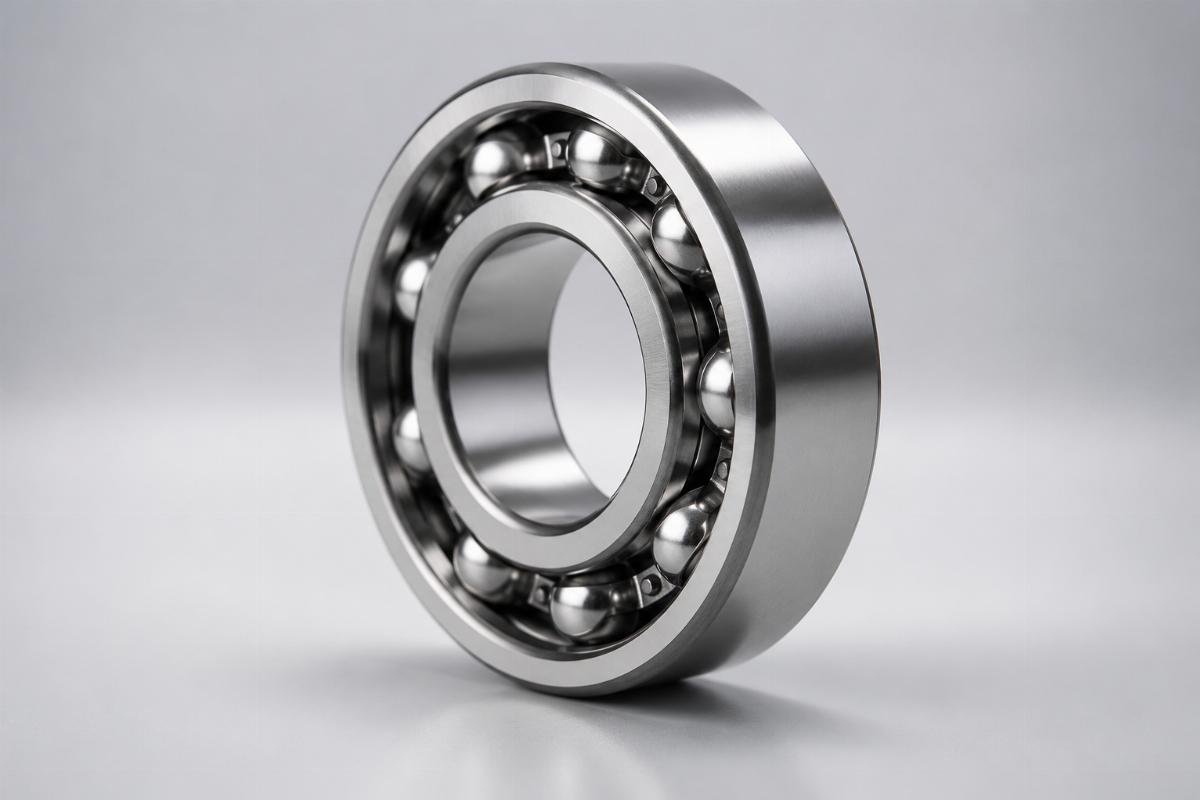
Technical comparison should include:
- Compare Material Composition – Request spectroscopy analysis to verify alloy composition
- Review Fatigue Test Data – Examine L10 life results under load conditions matching your application
- Check Dimensional Accuracy – Verify radial clearance, runout, and geometric tolerances
- Assess Lubrication Compatibility – Ensure generic bearings work with OEM-specified lubricants
- Evaluate Sealing Effectiveness – Compare contact seal design and contamination resistance
Which Industries Benefit Most from Generic Bearing Solutions?
Application criticality, not industry classification, should drive the OEM versus generic decision—with clear downtime cost thresholds determining the optimal specification. While certain sectors concentrate higher proportions of mission-critical applications, every industry contains standard scenarios where generic bearings from a qualified China supplier deliver optimal total cost of ownership without performance compromise.
| Industry Sector | Downtime Cost Exposure | Optimal Bearing Strategy | Success Factors |
|---|---|---|---|
| Wind Energy | High-cost offshore repairs | OEM for gearboxes, generic for pitch and yaw systems | Custom clearance modification and material certification |
| Mining | Substantial production losses | OEM for crushers, generic for conveyors | C4 clearance options for high-vibration environments |
| Food Processing | Moderate hourly losses | Generic for most applications | Stainless steel and food-grade lubrication options |
| Automotive | Assembly line stoppage costs | OEM for powertrain, generic for auxiliary systems | IATF 16949 certification and batch traceability |
| CNC Machinery | Precision-dependent output | OEM for spindle, generic for linear guides | P4 precision class and thermal stability testing |
A mining operation in Australia struggled with premature failures of cylindrical roller bearings (NU326 ECP model) in their crushers, experiencing only months of average service life in dusty, high-vibration conditions. By working with our engineering team to modify clearance from C3 to C4 and select specialized steel with controlled inclusion levels, the modified generic bearings extended service life substantially while maintaining cost advantages over OEM specification. This application demonstrated that clearance customization and material selection—not brand name—determine performance in demanding environments [NEED_CITE: Global Industrial Bearing Supply Chain Report on application-specific bearing selection].
The decision matrix for generic bearing adoption should consider:
- Quantify Downtime Exposure – Calculate actual hourly production losses during unplanned stoppages
- Identify Non-Critical Positions – Map equipment configurations to separate mission-critical from standard applications
- Evaluate Supplier Technical Capability – Confirm the China supplier offers application engineering support and failure analysis
- Request Trial Validation – Conduct controlled field testing with full documentation before fleet-wide adoption
- Establish Traceability Requirements – Define mandatory documentation including batch records and material certificates
Conclusion
The choice between OEM-branded and generic bearings is an economic calculation, not a quality assumption. Certified China suppliers deliver bearings matching OEM specifications in the vast majority of standard industrial applications, with full batch traceability, controlled heat treatment, and verifiable dimensional precision. OEM premiums remain justified only where downtime costs exceed significant thresholds or precision demands fall below micron-level tolerances. For procurement teams evaluating bearing sources, the critical factors are supplier qualification depth, traceability documentation rigor, and application engineering support—not brand labels alone.