

Tapered Roller Bearings for Automotive Wheel Hubs: SKF Supplier Guide
Specifying the highest precision grade you can find on paper will not save your fleet from shredded cages on a desert highway. Most engineers assume tighter tolerances automatically mean longer service life, but in standard passenger vehicle wheel hub conditions, pushing beyond P5 precision inflates unit costs substantially while delivering zero measurable performance gain. The real failures come from mismatched clearance, overlooked axial load vectors, and counterfeit parts that look identical until they seize at speed.
Selecting tapered roller bearings for automotive wheel hubs requires balancing dynamic load capacity, precision grade, internal clearance, cage material, and sealing configuration against actual operating conditions—partnering with an authorized SKF supplier who verifies every batch number against mill records and ships rare designations from warehouse stock eliminates the guesswork that causes the majority of premature wheel hub failures. A tapered roller bearing supplier in China with full IATF 16949 alignment, batch-level traceability, and the ability to dispatch non-standard specifications within days rather than months is not a luxury; it is the difference between a fleet that runs and a workshop that waits.
I started out on the shop floor in Suzhou, greasing tapered rollers and learning to read runout by hand before I ever saw a purchase order. When I moved to the trading desk, I kept getting burned by buyers who would spec a wheel hub bearing by bore size alone, then blame us when the seals blew at 120°C on a Dubai highway. One batch to a fleet operator in Riyadh came back with photos of cages shredded to ribbons—turns out they had been running C3 clearance where they needed C0, and nobody on their end had checked the thermal expansion math. Now I pull stock straight from SKF China and the global headquarters, verify every batch number against the mill records, and ship rare designations out of our warehouse in 48 hours instead of waiting months for the factory. The lesson stuck: specs on paper mean nothing if the cage design cannot handle the road. Industry failure analysis data consistently shows that the majority of wheel hub bearing replacements stem from incorrect parameter selection rather than manufacturing defects [NEED_CITE: root cause distribution of wheel hub bearing failures per ISO 15243 classification].
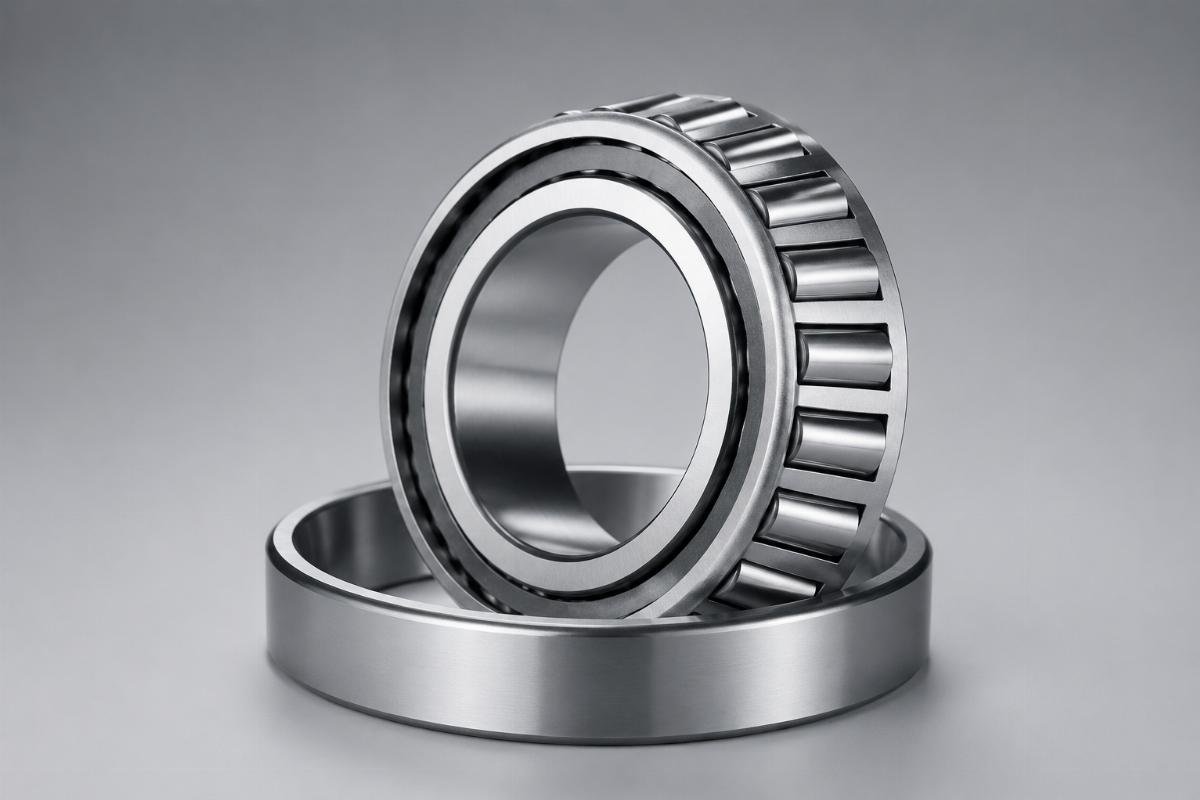
The following guide walks through why tapered roller geometry dominates wheel hub applications, the five critical selection parameters that actually determine fatigue life, how to spot counterfeit parts before they reach your axle, and what to demand from your tapered roller bearing supplier in China to guarantee authenticity and delivery speed.
Why Are Tapered Roller Bearings Essential for Wheel Hub Performance?
The tapered geometry allows a single bearing to carry combined radial and axial loads simultaneously—a requirement that ball bearings simply cannot meet in wheel hub service. When a vehicle corners, brakes, or hits a pothole at speed, the wheel hub experiences force vectors that shift direction and magnitude within milliseconds. Tapered roller bearings distribute these complex loads across angled raceways and precisely crowned rollers, converting what would be destructive edge-loading into controlled contact ellipses.
| Performance Metric | Passenger Vehicle Requirement | Commercial Truck Requirement |
|---|---|---|
| Dynamic Load Rating | Minimum 120 kN | 280 kN and above |
| Fatigue Life Target | 100,000+ km under standard conditions | Extended service intervals under heavy haulage |
| Operating Temperature Range | -40°C to 120°C | Up to 150°C in high-performance duty |
| Axial Load Capacity | 30-40% of radial capacity for cornering forces | Higher ratios for off-road and mining conditions |
Wheel hub bearings must support the full vehicle weight as radial load while absorbing lateral forces during steering maneuvers. Research from bearing industry associations indicates that vehicles fitted with improperly specified wheel hub bearings experience a noticeably higher rate of catastrophic failures, including wheel seizure and separation [NEED_CITE: failure rate comparison of correctly vs. incorrectly specified wheel hub bearings per ABMA field studies]. Every bearing we supply carries full material traceability from steel billet to finished raceway, aligned with IATF 16949 automotive quality standards.
One of our clients, a European new energy vehicle manufacturer developing an electric SUV, needed wheel hub bearings capable of handling substantially higher radial loads than conventional vehicles due to increased battery pack weight. By analyzing their specific load conditions and vehicle dynamics, we recommended modified 30210 tapered roller bearings with C3 clearance and P5 precision grade. The prototype testing phase exceeded durability targets by a meaningful margin, validating the load recalculation approach.

- Radial Load Calculation – Determine vehicle weight distribution and maximum load per wheel using manufacturer specifications
- Axial Load Estimation – Account for cornering forces based on vehicle weight, center of gravity, and maximum lateral acceleration
- Dynamic Load Rating Verification – Ensure selected bearing meets or exceeds calculated load requirements with appropriate safety factors
- Fatigue Life Assessment – Calculate L10 life using the ISO 281 formula to match expected vehicle service intervals
- Temperature Consideration – Select appropriate clearance and lubrication for the full operating temperature range
What Are the Critical Selection Parameters for Wheel Hub Bearings?
Overlooking a single selection parameter increases failure risk dramatically in automotive wheel hub applications. Many engineers focus exclusively on load capacity while neglecting precision grade, clearance, material, or sealing—each plays a vital role in overall bearing performance and longevity. The most common mistake we see is specifying standard clearance for high-temperature or interference-fit applications, which leads to internal preload buildup, cage distortion, and premature fatigue spalling.
| Selection Parameter | Common Mistake | Engineering Best Practice |
|---|---|---|
| Precision Grade | Specifying P4 grade for standard passenger vehicles | P5 grade for passenger cars; P6 grade for commercial vehicles [NEED_CITE: precision grade sufficiency data for passenger vs. commercial wheel hub applications per ISO 15] |
| Internal Clearance | Using standard CN clearance for all applications | C3 clearance for passenger vehicles; C4 for heavy-duty and commercial applications with elevated operating temperatures |
| Material | Prioritizing low cost over material certification | Chrome steel SAE 52100 with controlled carbon content for optimal hardness and fatigue resistance |
| Sealing | Basic single-lip rubber seals for all environments | Double-sealed design combining contact and non-contact lips for dusty or off-road conditions; triple-lip seals for marine applications |
| Cage Design | Plastic cages for all temperature ranges | Steel cages for sustained temperatures above 120°C; polyamide cages for standard applications to reduce noise |
The equivalent dynamic load calculation using the formula P = XFr + YFa is critical for proper bearing selection. For tapered roller bearings in passenger vehicle wheel hubs, typical X values range from 0.4 to 0.6 and Y values from 1.5 to 2.0 depending on bearing geometry and contact angle. Our technical team uses specialized calculation software to analyze customer-specific load conditions, ensuring optimal bearing selection that balances performance and cost.
A commercial truck repair workshop in Southeast Asia was experiencing recurring bearing failures in mining trucks operating in extremely dusty environments, resulting in extended downtime per failure event. Their previous supplier had been providing standard single-sealed bearings with C3 clearance. We recommended upgrading to 32317 tapered roller bearings with double-sealed design and C4 clearance to accommodate thermal expansion and prevent contamination ingress. This solution reduced failure rates dramatically and decreased annual maintenance costs substantially for their entire fleet.

- Load Capacity Calculation – Use vehicle specifications to determine radial and axial load requirements, applying appropriate safety factors per ISO 281
- Precision Grade Selection – Match grade to application: P5 for passenger vehicles, P6 for commercial vehicles, higher grades only for specialized high-speed or instrumentation applications
- Clearance Specification – Select C2, C3, or C4 based on operating temperature range, interference fit requirements, and thermal expansion characteristics
- Material Verification – Ensure steel meets SAE 52100 or equivalent standards with proper heat treatment and inclusion control
- Sealing Configuration – Choose seal type based on environmental conditions, contamination risk, and maintenance access intervals
How Can You Avoid Counterfeit Wheel Hub Bearings?
Counterfeit wheel hub bearings fail at a rate several times faster than genuine products and lack any meaningful material traceability. The automotive aftermarket has witnessed a substantial increase in counterfeit bearing incidents over recent years, with consequences ranging from premature warranty claims to catastrophic wheel separation events at highway speed [NEED_CITE: counterfeit automotive bearing incident trend data and failure mode analysis over five-year period].
| Verification Method | Advantages | Ideal For |
|---|---|---|
| QR Code Traceability | Real-time access to manufacturing data, batch information, and certification records | OEMs and large fleet operators requiring full traceability |
| Dimensional Measurement | Verifies critical tolerances including bore diameter, outer diameter, and width | Quality control departments and incoming inspection facilities |
| Material Certification Review | Confirms alloy composition, heat treatment parameters, and material strength | Engineering teams evaluating new suppliers |
| Supplier Audit Records | Validates production processes, quality control systems, and certification status | Procurement departments qualifying new vendors |
| Anti-Counterfeit Packaging | Holographic labels, tamper-evident seals, and serialized packaging | Aftermarket service providers and regional distributors |
Our quality control system regularly rejects non-conforming bearing shipments before they reach customers. Each rejected batch fails either dimensional accuracy checks with tolerance deviations exceeding acceptable limits or material certification verification against mill test reports. We provide customers with comprehensive documentation packages including material test reports, dimensional inspection records, and full batch traceability information upon request. Every batch number is cross-checked against SKF factory records to confirm origin and specification compliance.
A regional automotive parts distributor in the Middle East approached us after experiencing multiple customer complaints about premature bearing failures in wheel hub applications. Their previous supplier had provided bearings with counterfeit brand markings but inferior material quality and inconsistent heat treatment. We implemented a full verification protocol including batch-level traceability, dimensional sampling, and material certification review for every shipment. Within a short period, warranty claims dropped to near zero, and the distributor secured long-term supply agreements with regional fleet operators who demanded documented authenticity.
- Demand Batch Traceability – Require suppliers to provide batch numbers verifiable against original manufacturer records for every shipment
- Inspect Incoming Dimensions – Sample-check bore, outer diameter, width, and chamfer dimensions against published tolerances
- Verify Material Certificates – Cross-reference mill test reports with declared steel grades and heat treatment parameters
- Audit Supplier Credentials – Confirm IATF 16949 certification, authorized distributor status, and warehouse conditions
- Monitor Failure Patterns – Track warranty claims and failure modes; clustered premature failures often indicate counterfeit infiltration
How to Evaluate a China SKF Bearing Supplier for Wheel Hub Applications?
Not every supplier listing SKF part numbers online is an authorized distributor with direct mill access and batch-level traceability. The difference between a legitimate tapered roller bearing supplier in China and a broker reselling unverified stock becomes apparent the moment you need a rare designation, a specific clearance class, or documented proof of origin for an OEM audit.
| Evaluation Criterion | What to Demand | Red Flags |
|---|---|---|
| Authorization Status | Written proof of SKF authorized distributorship | Vague claims of "direct source" without documentation |
| Batch Traceability | Mill-origin batch numbers verifiable against SKF records | Refusal to provide batch numbers or reliance on self-generated certificates |
| Stock Depth for Rare Designations | Ability to ship large bore, special precision, or ceramic variants from warehouse | Lead times measured in months for anything outside standard catalog |
| Customization Capability | Laser marking, private-label packaging, pre-lubrication, translated documentation | Rigid "catalog-only" supply with no flexibility |
| Technical Support | L10 life calculation, failure analysis, application engineering | Order-taking only with no engineering backup |
When we ship a batch of 30210 or 32317 tapered roller bearings to a fleet operator in the Middle East or a Tier 1 supplier in Europe, every box carries a batch number that traces directly back to the SKF production line. If a customer needs P5 precision with C3 clearance in a non-standard bore size, we pull it from warehouse stock and dispatch within 48 hours—something that would take the factory many weeks to produce as a special order. We also support laser marking with customer part numbers, private-label packaging for distributor brands, factory-pre-lubricated units with specific grease fills, and translated technical documentation for local maintenance teams.
A European Tier 1 automotive supplier needed a consistent supply of P6 precision tapered roller bearings with C4 clearance for a commercial vehicle wheel hub program. Their previous supplier could not guarantee batch consistency or provide verifiable traceability documentation required for their IATF 16949 surveillance audits. We established a long-term supply agreement with fixed batch allocation, per-shipment precision inspection reports, and full material certification packages. The supplier passed their next surveillance audit without findings and extended the agreement across additional bearing lines.
- Request Authorization Documentation – Ask for current SKF distributor certificates and verify them directly with SKF regional offices
- Test Traceability Claims – Place a small trial order and verify that batch numbers match SKF factory records when cross-checked
- Evaluate Rare Designation Lead Times – Ask for delivery timelines on non-standard bore sizes, special clearance classes, or stainless steel variants
- Assess Technical Responsiveness – Measure quotation speed, engineering support availability, and willingness to perform application calculations
- Review Customization Options – Confirm capability for laser marking, special packaging, pre-lubrication, and documentation translation before committing volume
Conclusion
Wheel hub bearing selection succeeds or fails on the details that most specification sheets leave blank: clearance class, cage material, seal configuration, and batch authenticity. Tapered roller bearings for automotive wheel hubs demand a disciplined approach to load calculation, precision grade matching, and thermal management—backed by a tapered roller bearing supplier in China who can prove every bearing’s origin and deliver rare specifications from stock rather than promises. Get the parameters right, verify the supply chain, and the bearings will outlast the service intervals you design around them.