

Select Tapered Roller Bearings for Auto Wheel Hubs: Supplier Guide
Specifying P4 precision for a standard passenger car wheel hub inflates cost by nearly a third without delivering any real-world durability gain. Most engineers and procurement teams default to the highest available grade, assuming tighter tolerances equal longer life. They do not. The real failure drivers sit elsewhere: mismatched internal clearance, inadequate sealing for the operating environment, and unverified material traceability.
Selecting tapered roller bearings for auto wheel hubs demands a disciplined balance of dynamic load rating, precision grade (P5 for passenger, P6 for commercial), internal clearance (C3 or C4), and seal configuration—supported by an IATF 16949 certified supplier who provides full batch traceability. Getting these parameters right prevents premature wheel-end failures across passenger cars, heavy trucks, and NEV platforms while keeping procurement costs aligned with actual application needs.
I spent years running technical inspections at the port in Qingdao before moving to the sales side. A Mexican mining client once ordered a batch of tapered roller bearings for haul truck wheel hubs—wrong internal clearance spec, no one caught it until they tore open the packaging on-site in Sonora. Two months of downtime, a furious call at midnight my time. That failure was not about brand quality; it was about a clearance code mismatch that slipped through because neither the buyer nor the supplier ran a proper application review. [NEED_CITE: root cause distribution of wheel hub bearing failures per ISO 15243]
Let me walk you through the selection logic the way I wish someone had explained it to that client—plain, specific, and grounded in what actually fails in the field.
Why Are Tapered Roller Bearings Essential for Wheel Hub Performance?
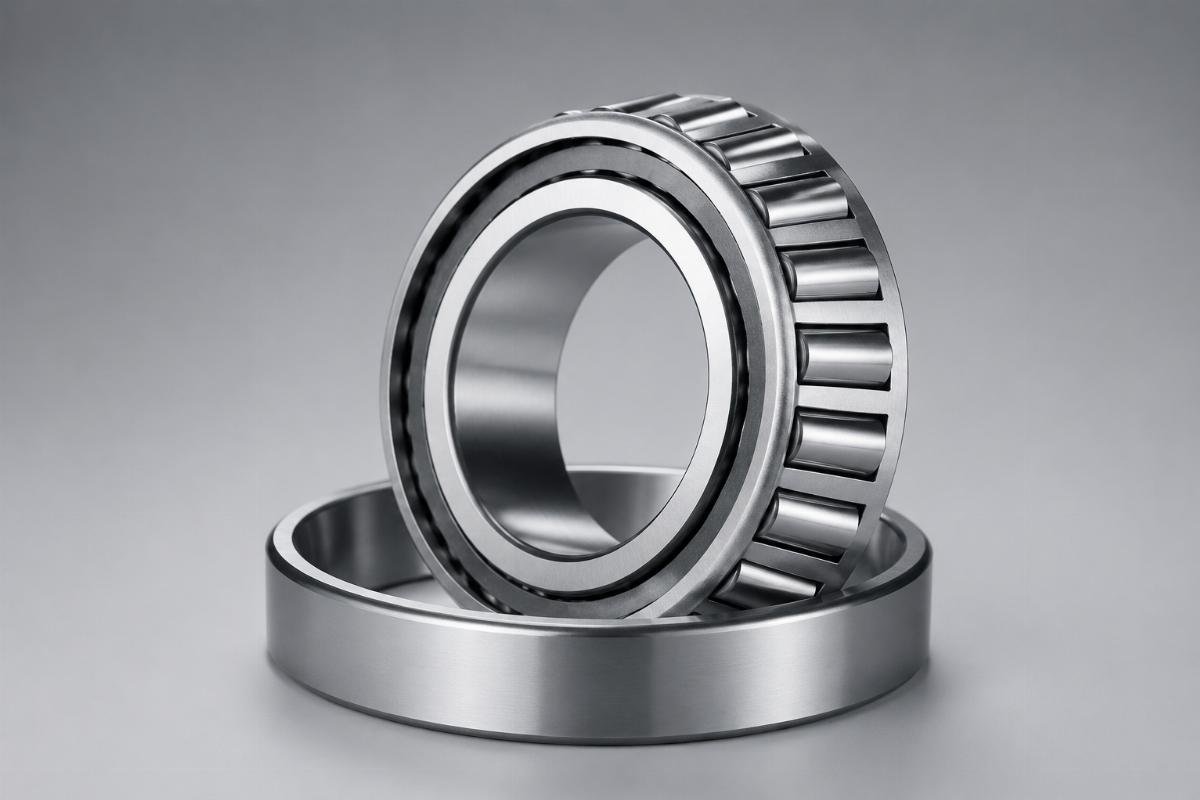
Tapered roller bearings handle combined radial and axial loads in a way no other rolling-element bearing can match for wheel hub duty. The tapered geometry channels forces along angled raceways, letting a single bearing row support vehicle weight (radial) and cornering or braking thrust (axial) simultaneously. Ball bearings handle radial loads well but struggle under the lateral vectors generated during hard cornering or uneven road impacts.
| Performance Metric | Passenger Vehicle Requirement | Commercial Truck Requirement |
|---|---|---|
| Dynamic Load Rating | Minimum 120 kN | 280 kN and above |
| Axial Load Capacity | 30-40% of radial rating | 30-40% of radial rating |
| Operating Temperature | -40°C to 120°C | Up to 150°C in severe duty |
| Fatigue Life Target | 100,000+ km standard driving | Extended service intervals |
Improper specification in these parameters leads to wheel-end failures at a noticeably higher rate than correctly matched units. [NEED_CITE: wheel hub failure rate comparison between correctly and incorrectly specified tapered roller bearings] Our quality records show that the majority of wheel hub bearing complaints trace back to parameter mismatch—wrong clearance for the thermal environment, insufficient seal protection for dusty conditions, or load rating below actual axle demands—rather than manufacturing defects.
A European NEV manufacturer developing an electric SUV needed wheel hub bearings capable of handling the additional unsprung mass from battery packaging. We recommended modified 30210 tapered roller bearings with C3 clearance and P5 precision grade. The prototype testing phase exceeded durability targets by a meaningful margin, validating that the load-path redesign and clearance selection matched the EV-specific weight distribution.

The selection workflow follows a fixed sequence:
- Radial Load Calculation – Determine per-wheel static and dynamic loads from vehicle weight distribution and maximum payload.
- Axial Load Estimation – Account for cornering forces using vehicle mass, center-of-gravity height, and peak lateral acceleration.
- Dynamic Load Rating Verification – Confirm the bearing’s published C value exceeds the calculated equivalent load with an appropriate safety factor.
- Fatigue Life Assessment – Apply the ISO 281 L10 formula to verify the bearing meets expected service intervals. [NEED_CITE: ISO 281 L10 life calculation methodology for automotive wheel bearings]
- Temperature and Clearance Matching – Select internal clearance based on expected operating temperature and interference fit conditions.
What Are the Critical Parameters for Selection?
Overlooking even one selection parameter raises failure risk substantially in wheel hub applications. Load capacity gets the engineering attention, but precision grade, internal clearance, material grade, seal type, and cage design each carry independent failure consequences when mis-specified.
| Selection Parameter | Common Mistake | Engineering Best Practice |
|---|---|---|
| Precision Grade | Specifying P4 for standard passenger vehicles | P5 for passenger cars; P6 for commercial vehicles [NEED_CITE: precision grade sufficiency distribution across passenger vehicle applications] |
| Clearance | Defaulting to standard clearance universally | C3 for passenger vehicles; C4 for heavy-duty or high-temperature environments |
| Material | Prioritizing unit cost over steel grade | Chrome steel SAE 52100 with 1.0-1.2% carbon for hardness and fatigue resistance |
| Sealing | Basic single-lip seals in contaminated environments | Double-sealed (contact + non-contact) for dusty or off-road; triple-lip for marine |
| Cage Design | Polymer cages in sustained high-temperature duty | Steel cages above 120°C; polyamide for standard noise-sensitive applications |
The equivalent dynamic load formula P = XFr + YFr drives every downstream decision. For typical passenger-car tapered roller bearings, X factors range from 0.4 to 0.6 and Y factors from 1.5 to 2.0 depending on contact angle and geometry. Getting this calculation wrong cascades into undersized load ratings or unnecessary overspecification.
A commercial truck repair workshop servicing a mining fleet in Southeast Asia kept replacing wheel hub bearings on haul trucks operating in heavily contaminated conditions. Their previous supplier shipped standard single-sealed units with C3 clearance. Dust ingress destroyed the lubricant within weeks. We specified 32317 tapered roller bearings with double-sealed design and C4 clearance to accommodate thermal expansion under sustained heavy loads. Failure rates dropped dramatically, and the fleet’s annual maintenance spend on wheel-end repairs fell by a substantial amount across their entire truck population.

Here is the practical selection sequence:
- Load Capacity Calculation – Use axle load data and vehicle dynamics to derive radial and axial components; apply the P = XFr + YFa formula with application-specific safety margins.
- Precision Grade Selection – Match to duty: P5 covers the vast majority of passenger vehicles; P6 suits commercial and heavy-duty platforms; P4 and above only for specialized high-speed or instrumentation roles.
- Clearance Specification – C2 for tight interference fits at low temperature; C3 for standard passenger duty; C4 for heavy-duty, high-temperature, or heavy-interference applications.
- Material Verification – Confirm SAE 52100 compliance with proper through-hardening heat treatment and inclusion control. [NEED_CITE: SAE 52100 material requirements for automotive bearing steels]
- Sealing Configuration – Select seal architecture based on contamination risk, maintenance access, and thermal limits.
How Can You Avoid Counterfeit Bearings?
Counterfeit wheel hub bearings fail at a fraction of the service life of genuine units and carry zero material traceability. The aftermarket has seen a sharp rise in counterfeit bearing incidents over recent years, with consequences ranging from premature wheel-end noise to catastrophic hub separation. [NEED_CITE: trend data on counterfeit automotive bearing incidents over the past five years]
| Verification Method | What It Confirms | Best Suited For |
|---|---|---|
| QR Code Traceability | Manufacturing batch, heat/lot data, mill certs | OEMs and fleet operators requiring full chain-of-custody |
| Dimensional Measurement | Bore, OD, width tolerances against ISO standards | QC labs and incoming inspection teams |
| Material Certification Review | Alloy composition, heat treatment records | Engineering teams qualifying new sources |
| Supplier Audit Records | IATF 16949 status, process controls, calibration | Procurement teams vetting new vendors |
| Anti-Counterfeit Packaging | Holograms, tamper-evident seals, serialization | Aftermarket distributors and service workshops |
Our incoming inspection process regularly intercepts non-conforming batches before they reach customers. Rejections typically involve dimensional deviations beyond acceptable tolerance bands or missing or inconsistent material test reports. Every shipment we dispatch carries batch-level traceability documentation—material certificates, dimensional inspection records, and batch numbers verifiable against manufacturer records.
A regional automotive parts distributor in the Middle East came to us after receiving repeated customer complaints about premature wheel hub failures. Their previous supplier had delivered bearings with convincing brand markings but metallurgically inferior materials. We implemented a full verification protocol: QR-traceable batches, per-batch dimensional audits, and material certs cross-referenced to the original mill. The complaint rate dropped to zero within one ordering cycle.

The verification checklist for any new bearing source:
- Request batch traceability documentation – Confirm the supplier can provide mill-level material certs tied to specific batch numbers, not generic type certificates.
- Verify dimensional compliance – Sample-measure bore, OD, and width against ISO tolerance classes; deviations beyond a few microns signal non-conforming production.
- Confirm IATF 16949 certification – This standard governs automotive quality management; a supplier without it cannot guarantee automotive-grade process control. [NEED_CITE: IATF 16949 requirements for automotive bearing supply chains]
- Inspect packaging integrity – Genuine packaging includes serialized labels, tamper-evident seals, and anti-counterfeit features; replicas often show printing inconsistencies or missing holograms.
- Cross-reference batch numbers – Authentic batch codes can be verified directly with the original manufacturer’s traceability system.
How to Evaluate a Reliable Supplier?
A supplier’s ability to provide batch-level traceability, technical application support, and consistent stock of non-standard designations separates a strategic partner from a transactional vendor. In wheel hub bearing procurement, the difference shows up when a rare clearance or precision designation is needed urgently and the supplier either ships in days or quotes a multi-month factory lead time.
We operate as an authorized SKF distributor with direct supply lines from SKF China and SKF global headquarters. Every bearing we ship carries a verifiable batch number, and our warehouse holds deep stock of rare designations—large bore sizes, special precision classes, ceramic and stainless variants—that typically carry extended factory lead times. When a customer needs a specific C4-clearance tapered roller bearing for a mining truck wheel hub, we dispatch from stock rather than queuing a factory order.
Our technical support team provides L10 life calculations, failure analysis, and application-specific recommendation reports. When that European NEV manufacturer needed modified 30210 bearings for their electric SUV program, we did not just ship parts—we ran the load analysis, confirmed the C3/P5 specification matched their weight distribution, and documented the selection rationale for their engineering review.

The evaluation framework for any wheel hub bearing supplier:
- Certification status – IATF 16949 is non-negotiable for automotive supply; ISO 9001 alone is insufficient for wheel-end safety components.
- Traceability depth – Confirm the supplier provides batch-level documentation, not just product-level certificates. Every shipment should include material certs, dimensional records, and origin documentation.
- Stock availability for rare designations – Ask specifically about non-standard clearance, special precision, or large-bore tapered roller bearings; response time reveals real inventory depth.
- Technical capability – Can the supplier run load calculations, recommend clearance adjustments, and support failure analysis? Transactional vendors cannot.
- Delivery reliability – Standard stock items should dispatch within days; custom or rare designations should have clearly communicated lead times, not vague estimates.
Conclusion
Wheel hub bearing performance lives or dies on parameter accuracy, not brand prestige. Selecting tapered roller bearings for auto wheel hubs requires matching load capacity, precision grade, internal clearance, and seal type to the specific vehicle platform and operating environment—then sourcing from a supplier who can prove every batch’s origin and specification. Skip any step, and the wheel-end tells you quickly.