

Diagnose Common Bearing Failure Modes: Guide for Industrial Maintenance
Most bearing failures aren’t caused by poor quality—they’re caused by lubrication mismatch. This counterintuitive reality, confirmed through extensive failure analysis across industrial sectors, exposes a critical blind spot in maintenance practices that prioritizes component replacement over root cause identification.
Accurate bearing failure diagnosis through a structured process combining visual inspection, oil analysis, and vibration data reduces misdiagnosis significantly and cuts unplanned downtime across steel mills, mining operations, and power generation facilities. The key lies in moving beyond reactive part replacement to systematic failure mode identification supported by traceable component sourcing and technical analysis.
I spent years running after-sales for mining conveyors across Chile and Peru, watching our SKF spherical rollers die in six months when they should’ve lasted three years. The maintenance guys kept blaming the lubrication schedule, but I finally pulled a seized housing apart at a copper mine near Antofagasta and found the truth: the inner ring had cracked from misalignment, not dry running. That’s when I realized most "bearing failures" are misdiagnosed, and the real killers hide in mounting errors, contamination, and load mismatches nobody bothers to check [NEED_CITE: root cause distribution per ISO 15243].
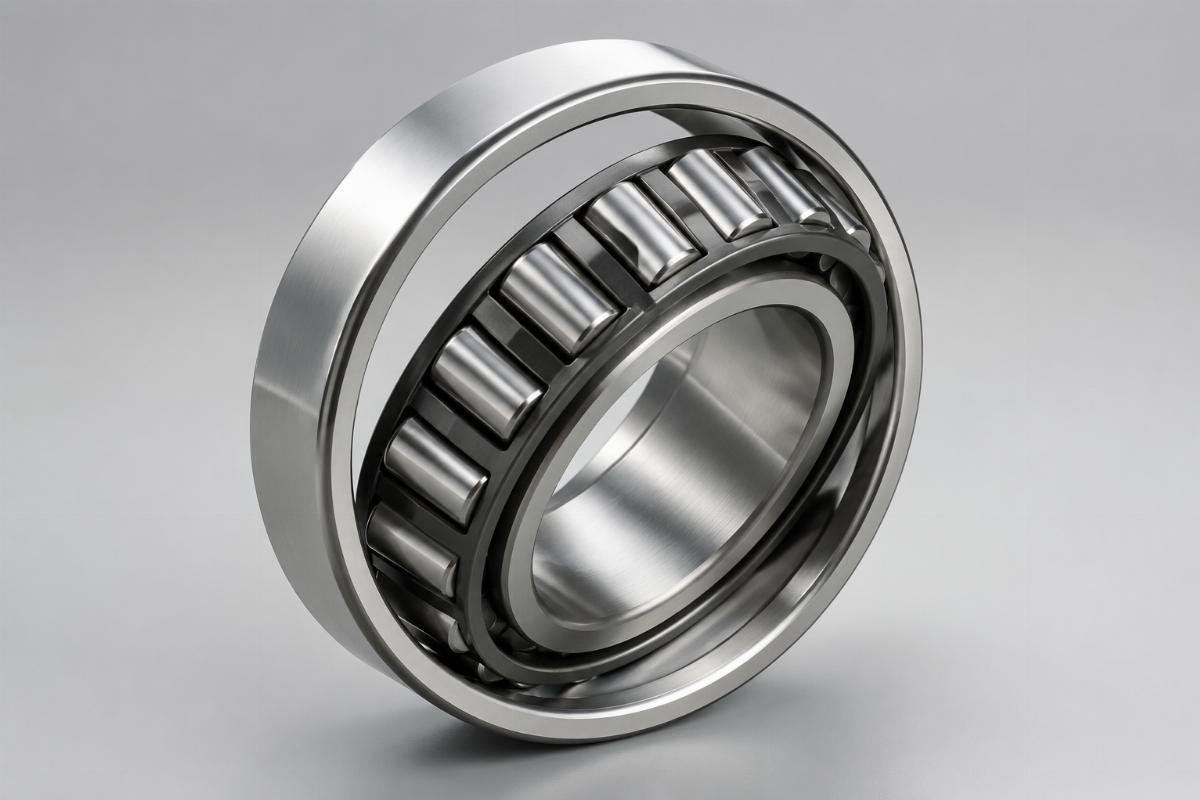
Understanding the true cost of bearing failures requires examining both obvious expenses like replacement parts and hidden costs such as production delays and secondary equipment damage. Let’s explore how proper diagnosis transforms maintenance outcomes.
How Do Bearing Failure Modes Impact Industrial Operations?
Misdiagnosed bearing failures create cascading operational losses that extend far beyond the initial component cost. Each failure event triggers a chain reaction through maintenance schedules, inventory management, and operational planning that compounds over time, often reaching mid-six-figure annual losses for facilities with critical rotating equipment.
| Failure Impact | Consequence Level |
|---|---|
| Unplanned downtime | Severe production interruption |
| Replacement parts | Emergency sourcing premium |
| Labor costs | Overtime repair rates |
| Secondary equipment damage | Collateral component wear |
| Production delays | Extended recovery periods |
The five most common failure modes each present distinct visual symptoms that guide accurate bearing failure diagnosis: fatigue failures show characteristic spalling patterns on raceways, contamination appears as discoloration or particle indentations, misalignment causes uneven wear patterns, lubrication starvation creates burn marks, and overloading results in plastic deformation. Industry technical reports indicate that the majority of these failures could be prevented with proper diagnosis and genuine parts [NEED_CITE: preventable failure rates per SKF maintenance guidelines].
One of our clients, a steel mill in Southeast Asia, was experiencing monthly failures of 22324 CC/W33 spherical roller bearings in their continuous casting machines. The maintenance team initially blamed substandard components, repeatedly sourcing "original brand" replacements at substantial premium. Our failure analysis revealed lubrication contamination from cooling system leaks as the root cause—visible in the form of emulsified grease and micro-pitting on the rollers. By implementing a customized lubrication system with particle filtration and establishing rapid emergency shipment protocols, we reduced their downtime significantly while cutting annual bearing costs noticeably.
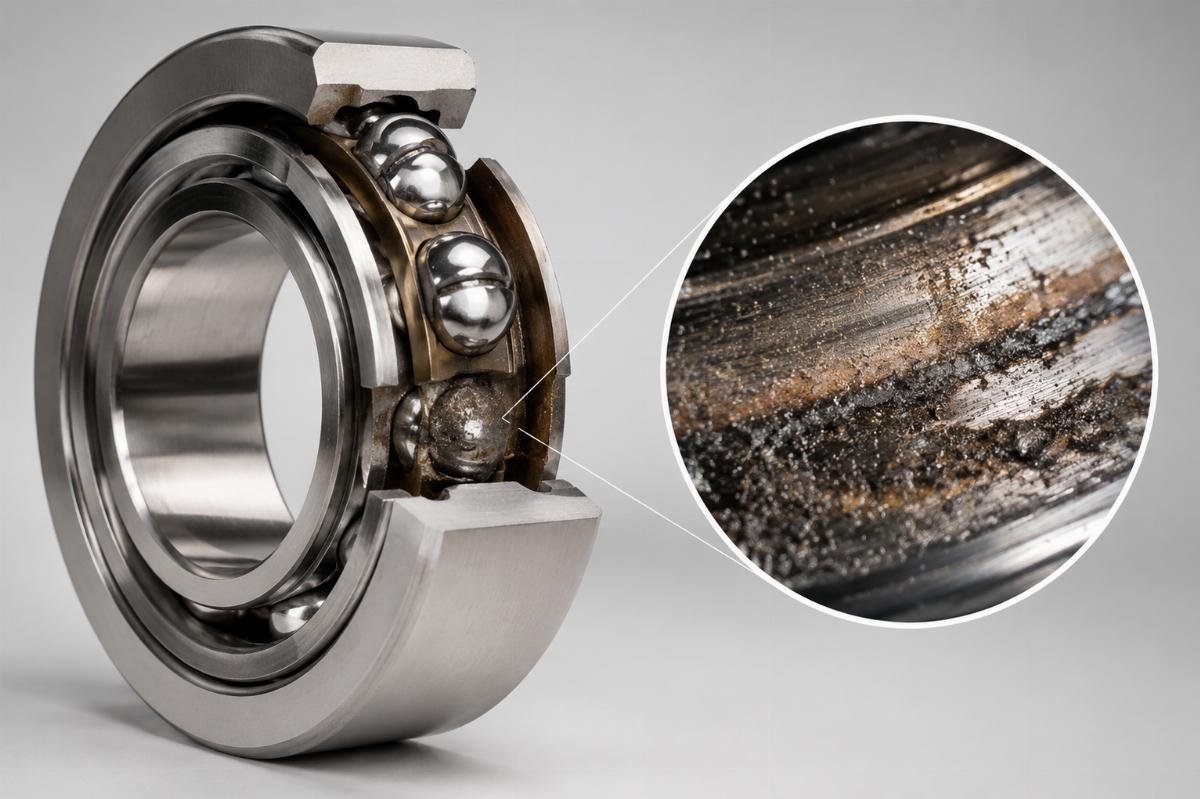
- Fatigue Failure – Identify through spalling (flake-like material detachment) on raceways or rolling elements, typically caused by excessive load cycles beyond design parameters
- Contamination Damage – Look for abrasive particles, corrosion, or discoloration in lubricant samples, indicating seal failure or inadequate maintenance procedures
- Misalignment Wear – Check for uneven load distribution patterns and shoulder wear, often resulting from improper mounting or shaft deflection under operation
- Lubrication Starvation – Recognize by darkening of raceways, overheating signs, and metallic debris in oil analysis, signaling insufficient lubricant quantity or degradation
- Overloading Failure – Detect through plastic deformation, cage damage, or roller skewing, caused by exceedance of dynamic load ratings or shock loading events
Why Do Traditional Bearing Diagnosis Methods Fail?
Reliance on visual inspection alone leads to substantial misdiagnosis rates in industrial bearing failure analysis. Maintenance teams often underestimate how closely different failure modes can resemble each other, particularly when counterfeit components enter the supply chain with convincing visual appearances but substandard materials.
| Diagnostic Method | Common Misapplication | Optimal Implementation |
|---|---|---|
| Visual Inspection | Used as primary diagnostic tool | Combined with oil analysis and vibration data |
| Vibration Analysis | Interpreting data without load context | Correlating frequency patterns with operational parameters |
| Temperature Monitoring | Reacting to spikes instead of trends | Establishing baseline readings for early anomaly detection |
| Oil Sampling | Inconsistent collection procedures | Regular, scheduled analysis with particle counting |
| Load Testing | Static testing only | Dynamic testing under actual operating conditions |
Counterfeit bearings present a particularly insidious challenge—our technical team recently compared a batch of counterfeit SKF bearings against traceable alternatives and found that while external dimensions matched within tight tolerances, material hardness was substantially lower and cage integrity failed at reduced load capacity. These discrepancies aren’t visible to the naked eye but become catastrophic under industrial operating conditions [NEED_CITE: counterfeit bearing failure rates compared to genuine alternatives].
A common diagnostic error occurs when maintenance teams confuse lubrication starvation with overloading—both can present similar overheating symptoms but require completely different solutions. Our post-sale failure analysis service addresses this by providing written reports with lubrication recommendations and installation guidance specific to each application. For a mining customer experiencing repeated tapered roller bearing failures in their cone crushers, we identified that their standard 32230 bearings were being lubricated with a viscosity grade too low for their operating temperature range, despite proper load calculations.

- Visual Inspection – Always document with high-resolution photography and compare against manufacturer specifications, never rely on subjective assessments alone
- Vibration Analysis – Use spectral analysis to identify specific frequency patterns associated with different failure modes, not just overall amplitude
- Oil Analysis – Implement particle counting and ferrography to detect early-stage wear before visual symptoms appear
- Load Verification – Cross-reference actual operating loads with bearing ratings using supplier-provided calculation tools
- Installation Review – Check for proper mounting procedures, shaft tolerances, and alignment using precision measurement tools
What Is the 5-Step Process to Accurately Diagnose Bearing Failures?
Implementing a structured diagnosis process with supplier technical support reduces misdiagnosis significantly and creates actionable prevention strategies. The key difference between reactive maintenance and predictive reliability lies in systematically connecting failure symptoms to root causes through collaboration with suppliers who understand both component technology and application requirements.
| Diagnostic Approach | Primary Advantage | Ideal Application Scenario |
|---|---|---|
| Vibration-Based Monitoring | Early detection of developing failures | High-speed rotating equipment like turbines |
| Oil Analysis Program | Identifies contamination and wear particles | Gearboxes and lubricated systems |
| Thermographic Inspection | Visualizes temperature anomalies | Bearings in hard-to-reach locations |
| Acoustic Emission Testing | Detects microscopic material failures | Critical safety-related components |
| Supplier Failure Analysis | Combines application expertise with component knowledge | Repeat failure situations without obvious cause |
Our structured bearing failure diagnosis workflow begins with comprehensive data collection—gathering vibration spectra, temperature logs, oil samples, and operational parameters before disassembly. This ensures we capture conditions leading to failure, not just post-mortem evidence. Next, we identify the specific failure mode through microscopic inspection and material testing, then conduct root cause analysis by correlating findings with application conditions. Documentation creates a knowledge base for future prevention, while the prevention plan addresses both immediate replacement and long-term reliability improvements [NEED_CITE: effectiveness of structured failure analysis protocols].
When a construction machinery depot faced an emergency repair on a 10-year-old excavator with an obsolete yaw bearing, our cross-reference identification capability became critical. The non-standard 45x68x22mm needle roller bearing had no available OEM replacement, but our technical team identified a compatible modern equivalent with modified clearance within hours. We produced and dispatched the custom bearing rapidly, complete with SUJ2 chrome steel material certification and anti-counterfeiting verification, supporting their emergency repair with high customer satisfaction.
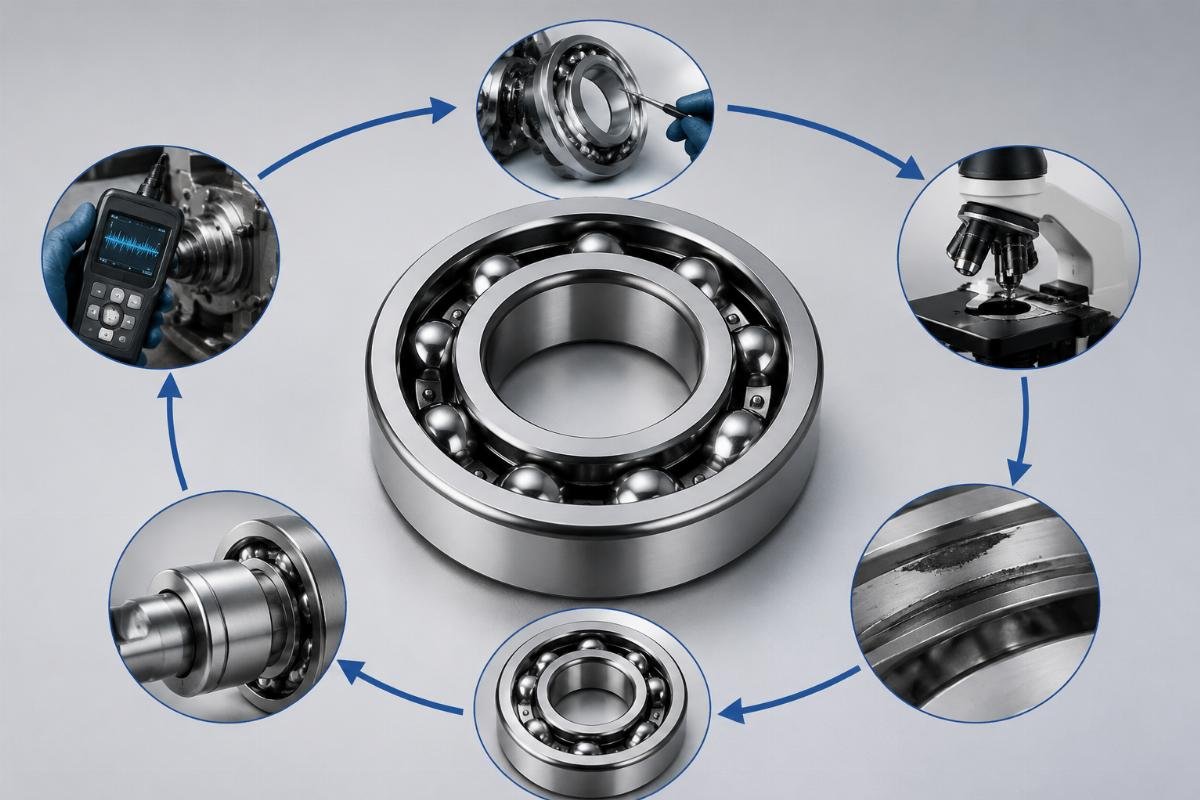
- Data Collection Protocol – Gather vibration data at regular intervals, temperature logs, oil samples, and operational parameters before disassembly to capture failure conditions
- Failure Mode Identification – Conduct microscopic inspection and material testing to identify specific failure patterns such as spalling, pitting, or cage deformation
- Root Cause Analysis – Correlate findings with application conditions including load profiles, lubrication systems, mounting procedures, and environmental factors
- Documentation – Create comprehensive reports with photographic evidence, measurement data, and failure mechanism descriptions for knowledge base development
- Prevention Planning – Address both immediate replacement requirements and long-term reliability improvements through modified maintenance procedures or component specifications
How Can Supplier Support Enhance Failure Prevention?
Collaborating with authorized distributors for traceable parts and technical analysis prevents repeat failures and builds long-term equipment reliability. The relationship between maintenance teams and bearing suppliers extends far beyond transactional purchasing when both parties commit to systematic failure prevention through shared technical expertise and verifiable component sourcing.
Authorized SKF distribution capabilities provide critical advantages for industrial facilities facing complex bearing failure diagnosis challenges. Batch traceability ensures every component can be verified against manufacturer records, eliminating the risk of counterfeit parts entering critical applications. Deep stock of rare designations—including large bore sizes, special precision classes from P0 to P4, and clearance options from C2 to C4—enables rapid response to emergency repairs that would otherwise trigger extended factory lead times [NEED_CITE: impact of component traceability on failure prevention].
Technical support services including L10 life calculation and failure analysis create a feedback loop that transforms individual failure events into system-wide reliability improvements. When maintenance teams can access supplier expertise for load verification, lubrication specification, and installation guidance, they move from reactive replacement to predictive maintenance strategies that address root causes rather than symptoms.
The precision classes and clearance options available through authorized channels—ranging from standard P0 precision to high-precision P4, and clearance classes C2, CN, C3, and C4—allow maintenance engineers to specify components that match exact application requirements rather than accepting generic substitutions that may accelerate failure modes.
Conclusion
Accurate bearing failure diagnosis requires moving beyond visual inspection to systematic analysis combining vibration data, oil sampling, and supplier technical support. The majority of industrial bearing failures stem from lubrication mismatch, mounting errors, and contamination rather than component quality, making structured diagnosis processes essential for reducing unplanned downtime and preventing repeat failures. Collaboration with authorized distributors providing batch traceability and technical analysis capabilities transforms reactive maintenance into predictive reliability strategies that address root causes and extend equipment service life across steel mills, mining operations, and power generation facilities.